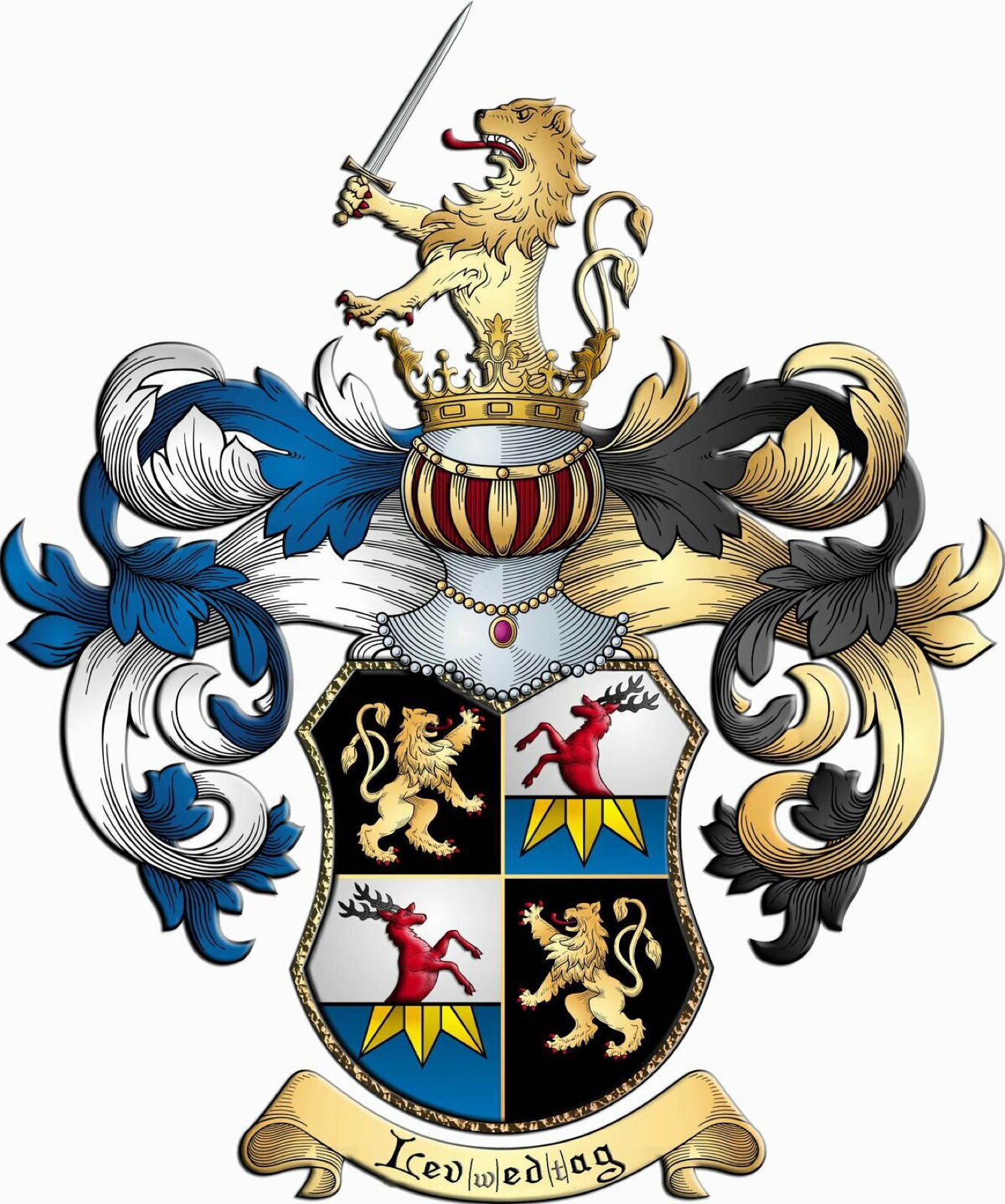
A family coat of arms used to belong only to noble families — at least that is how we usually think about it. Times have moved on. Anyone today can have their own. A coat of arms speaks to outsiders about a family's standing, its respect for its own history, its values and traditions. They are usually placed on jewellery, silverware, household objects and personal items.
How to construct a coat of arms
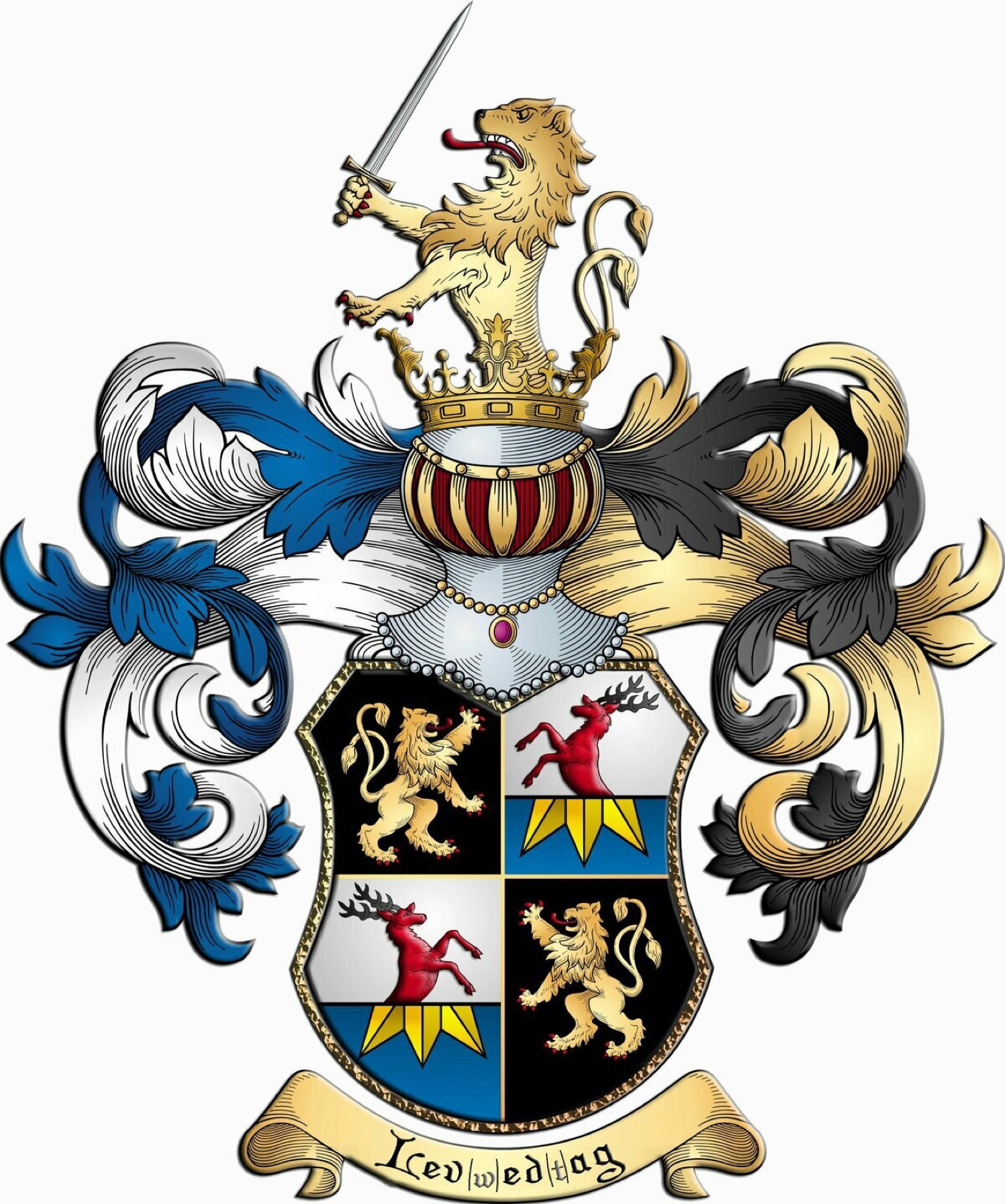
How do you create one if your family never had one historically? Each coat of arms is unique because it sets a family's story on a single page. Through its symbols you can show origin, philosophy, traditions and values. The composition follows centuries of heraldic convention. The main elements are:
- 1.The shield — the central part of the arms, carrying the main composition. This is where the symbols of the family sit. The Orlov family might place an eagle (orel) in the centre; a family of craftsmen might place the tools of their trade.
- 2.Supporters — figures holding the shield. These can be plants, or mythical creatures such as unicorns.
- 3.The helmet, crown or coronet with its crest above the shield.
- 4.The motto — usually in Latin, holding the philosophy of the family. It can sit above or below the shield.
The meaning of colour
A coat of arms usually uses no more than five colours. Each one carries meaning:
- Red — courage and bravery, and the blood spilled on the battlefield
- Green — wealth and abundance, also freedom and friendliness
- Blue — the colour of the sky, denoting patience, chastity and honesty
- Purple — generosity and piety
- Black — a layered colour, primarily standing for wisdom, silence, sorrow and loyalty unto death
Heraldic botany
Plants and flowers turn up on many coats of arms. They are never accidental. Each detail carries meaning:
- Oak — the strength of a family, longevity, deep roots
- Laurel — military glory and greatness
- Cedar — holiness and longevity
- Lily — purity and piety
- Carnation — exalted love and self-sacrifice
- Grapes — abundance and restraint
Heraldic zoology
Animals often appear on coats of arms, each standing for qualities the family wished to claim. The lion stands for courage, honour, bravery and generosity. It appears on the arms of many countries, cities, royal houses and noble families. Usually the heraldic lion stands on its hind legs; it can also be crowned, or have two heads. The eagle stands for power, might and far-sight. The familiar two-headed eagle adorns the arms of the Russian Federation. The bear stands for strength, but also cunning and rage; most often it appears in black. The snake denotes wisdom, deep knowledge and health, usually shown in blue. The lamb stands for purity, innocence and a gentle nature — it appeared on the arms of clergy and on famous chivalric arms, where a white lamb carries the victorious banner.
The heraldic bestiary also includes mythical creatures. The unicorn stands for purity, love of freedom, prudence and care. One of the most familiar heraldic unicorns is on the British arms; unicorns also appeared on the seal of Ivan IV and were struck on Russian coins in the sixteenth and seventeenth centuries. The dragon, in European tradition, stands for might, strength and valour. In Russian heraldry it took on the meaning of evil and is often shown being defeated by a hero, as in St George on the arms of Moscow. The griffin — half-eagle, half-lion — combined their qualities: strength and courage with wisdom and caution. It also stood for vengeance and, surprisingly, inspiration. A griffin appeared on the Romanov family arms before they took the Russian throne.
Unusual objects on arms
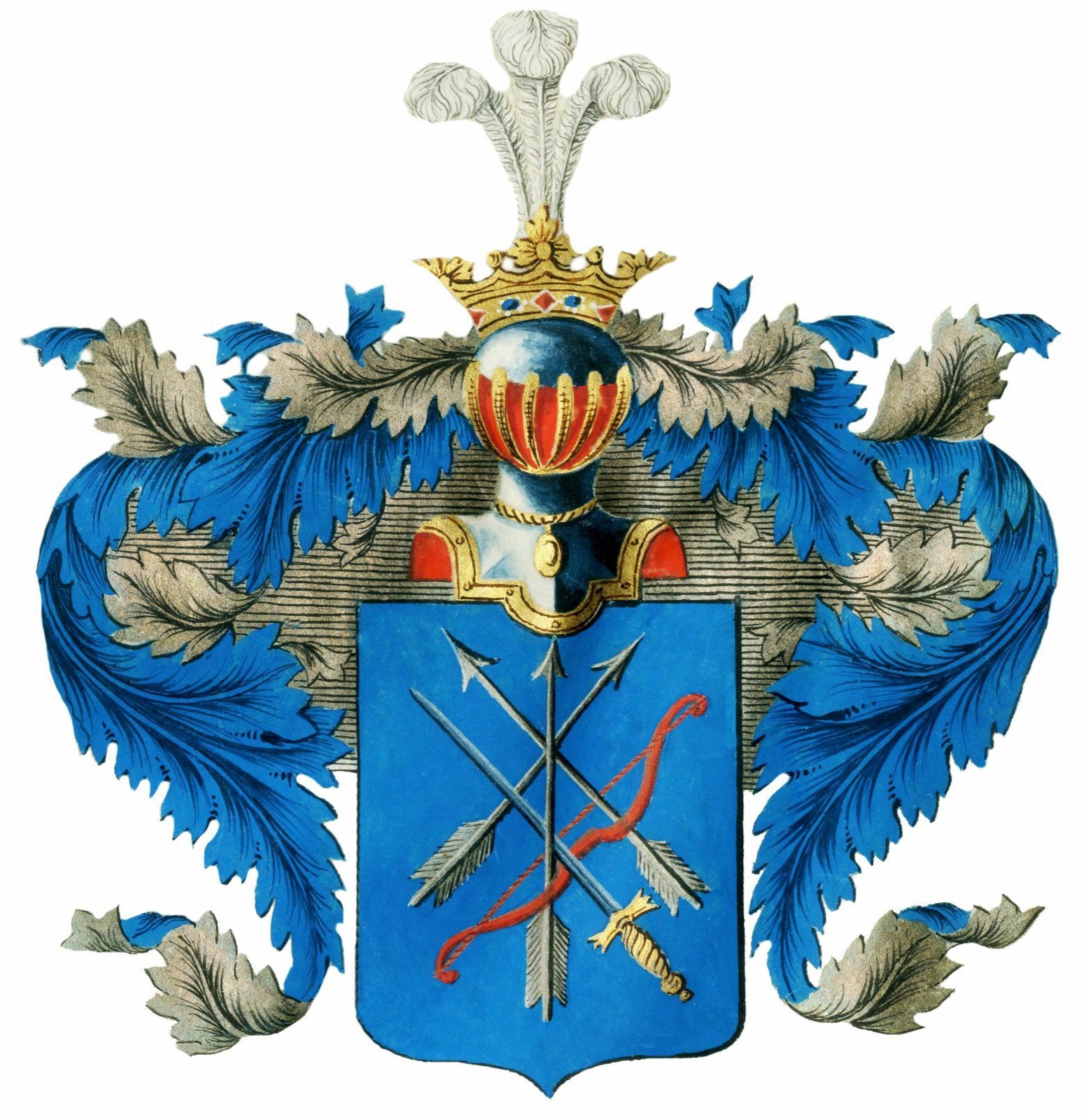
A coat of arms can include the most varied objects. Weapons are most common. A sword or sabre stands for enlightenment and purification from sin and turns up in family heraldry across many countries. Bow and arrows stand for steadfastness and the will to resist; they appeared on the arms of armourers and of cities famous for their gunsmiths. A cannon stands for a glorious military past, awarded to a family or town for a notable battle or siege withstood.
These are nowhere near all the symbols you will find on coats of arms. Heraldry is one of the most absorbing of the historical disciplines, and you can study it for years. Anyone can compose, or commission, their own coat of arms — and add something to the world's heraldic record.