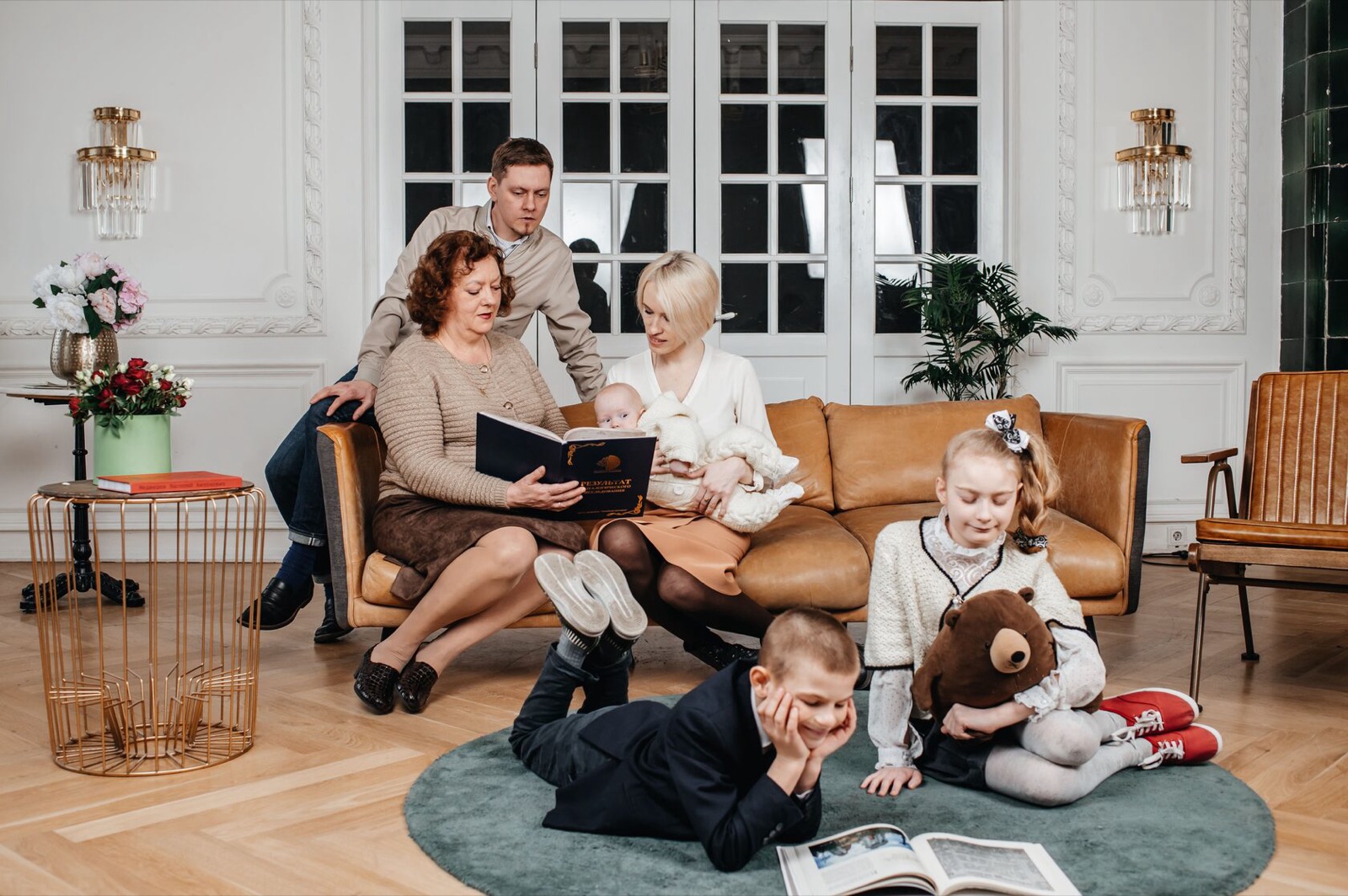
Family history matters to people for different reasons and at different times. The birth of a child pushes some to want a record to pass on. Others want to know who came before them, what they achieved. Some simply want to leave something behind. However the interest starts, the work tends to draw the whole family in.
What a family tree actually is
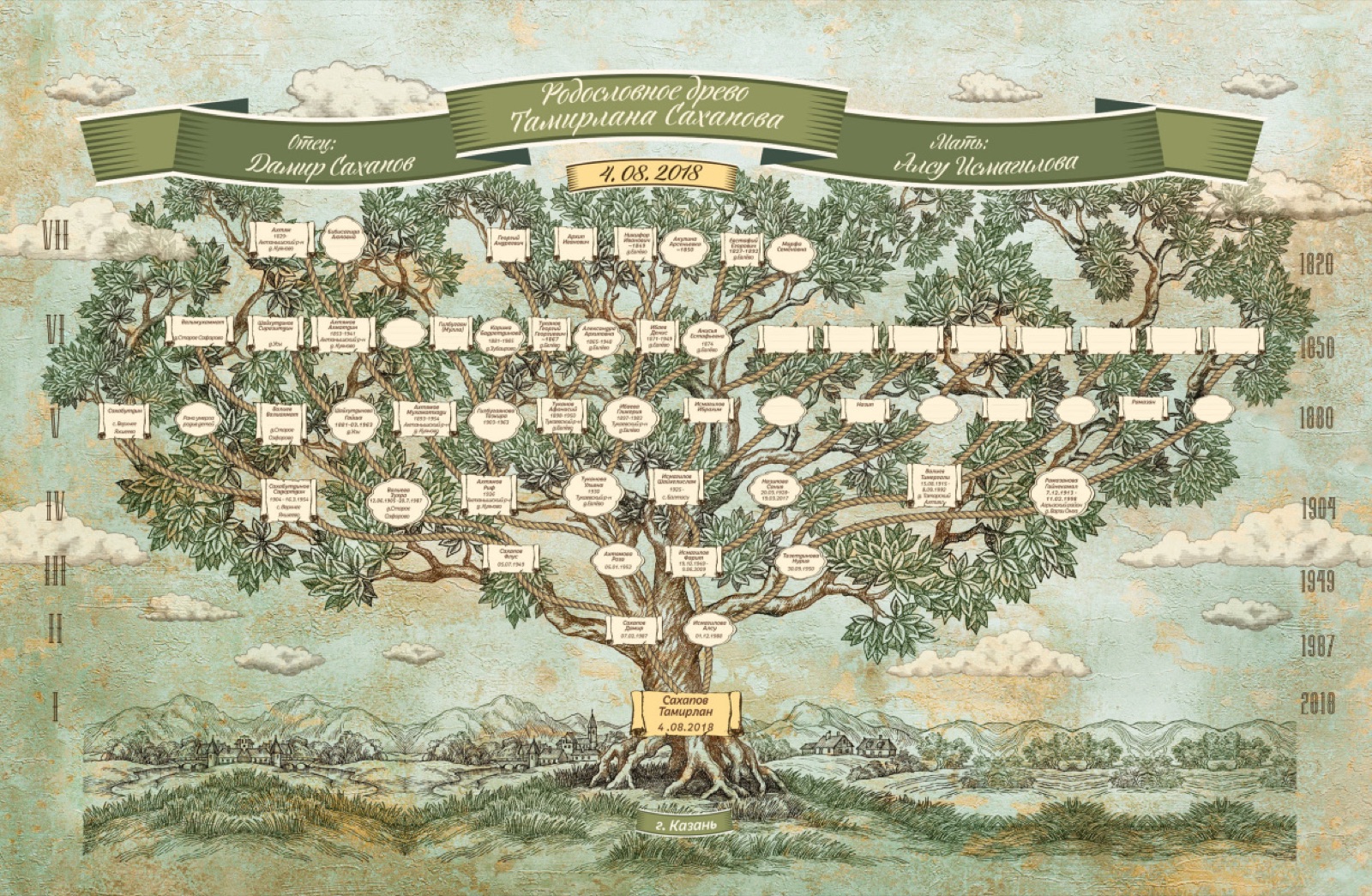
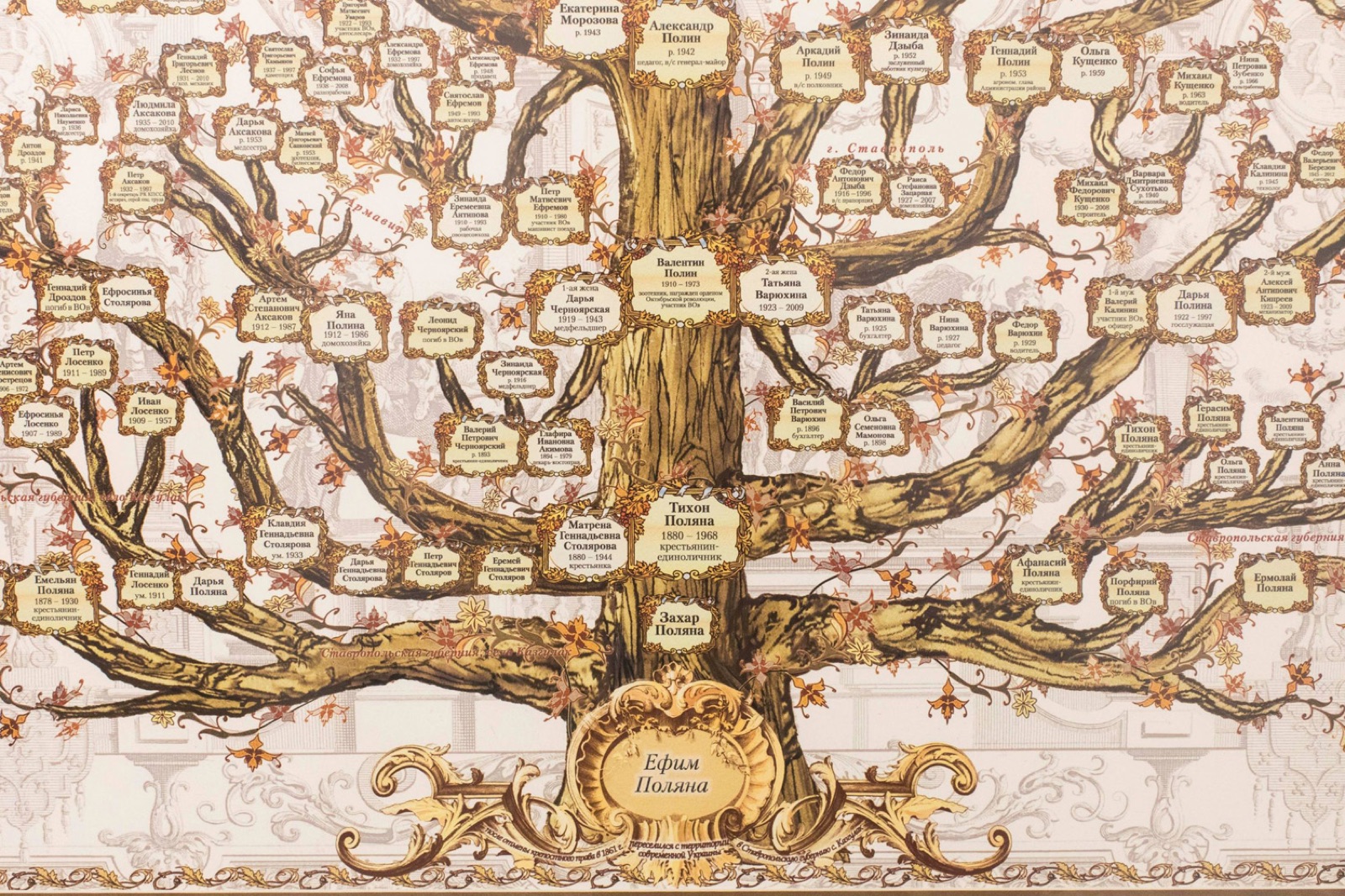
A family tree is a schematic picture of the kinship between ancestors and descendants. A tree is just one of several ways to show a genealogy. The others include the descent table (pokolennaya rospis), the family book and the family-history film. But a well-drawn tree decorates a room and catches the eye, and it makes a good gift.
Two ways to lay out the tree
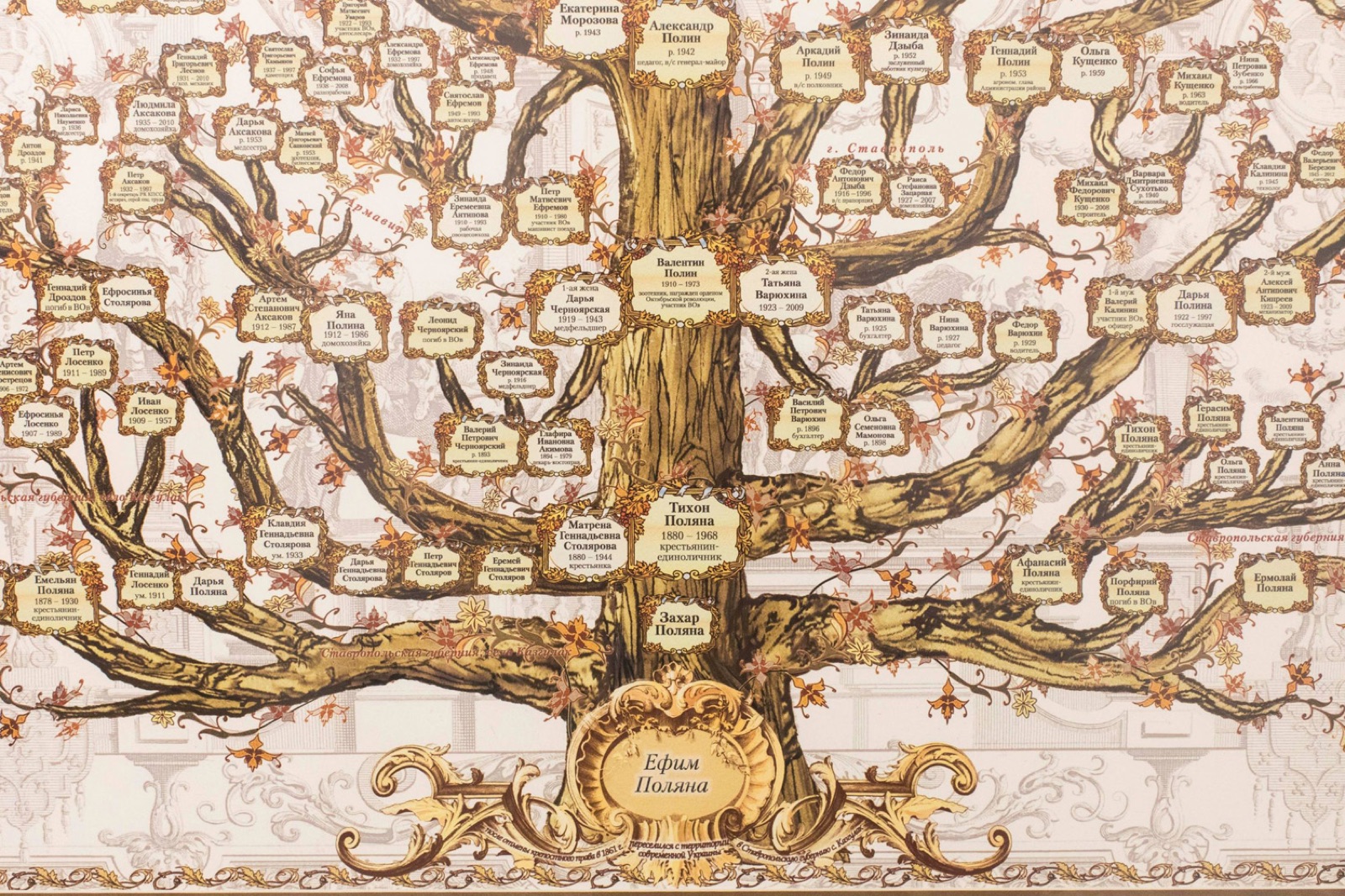
There are two basic forms: ascending and descending. An ascending tree goes from the descendant up to the ancestors. The person who commissioned the work usually sits at the bottom. This is convenient for anyone starting out — you move backwards into the past in stages. A descending tree goes the other way, from a single common ancestor down to the descendants. The ancestor sits at the top. This works when you have already gathered enough material to identify a founder of the line, or when the point is to prove descent from a known historical figure. The tree also distinguishes lines of inheritance. The direct line includes you, your parents, their parents and so on. The collateral line includes brothers, sisters, nephews, aunts, uncles, cousins. Russian genealogy is traditionally built along the male line — from father to son — because a married woman was considered part of her husband's family. A mixed scheme that includes the maternal line is perfectly possible if you want it. If you combine ascending and descending into one chart with the subject at the centre, ancestors above and descendants below, you get an hourglass — a good gift for a grandfather or great-grandfather. For a married couple, a "butterfly" works: the spouses at the centre with hourglasses extending to either side.
The information you need
To build a tree with real depth, you need to know your ancestors. Most people today can name their parents, grandparents, sometimes great-grandparents. Beyond that, the names are usually gone. Filling in those gaps is the work.
Interviewing relatives
Relatives are the first source of family history. Set aside time for one-on-one conversations. A voice recorder helps so that no detail slips. Three questions keep the conversation on track:
- what — what event happened (birth, marriage, death)
- where — at what place (school, work, residence)
- when — the date of the event, the years of education, the dates of jobs
Do not limit yourself to the relatives you see often. Distant cousins frequently hold useful information about your direct ancestors. Researching family history is also a good excuse to restore long-lost contact.
The home archive
After the conversations, the papers. Family archives carry a surprising amount. Some of it is not useful. Some of it tells you a great deal about the previous generations. Sort the material by category and by person. Biographical documents — passports, certificates, medals — fix the important dates of a life. Creative work, diaries, notebooks reveal the personality and the trade. Record everything chronologically.
Old photographs
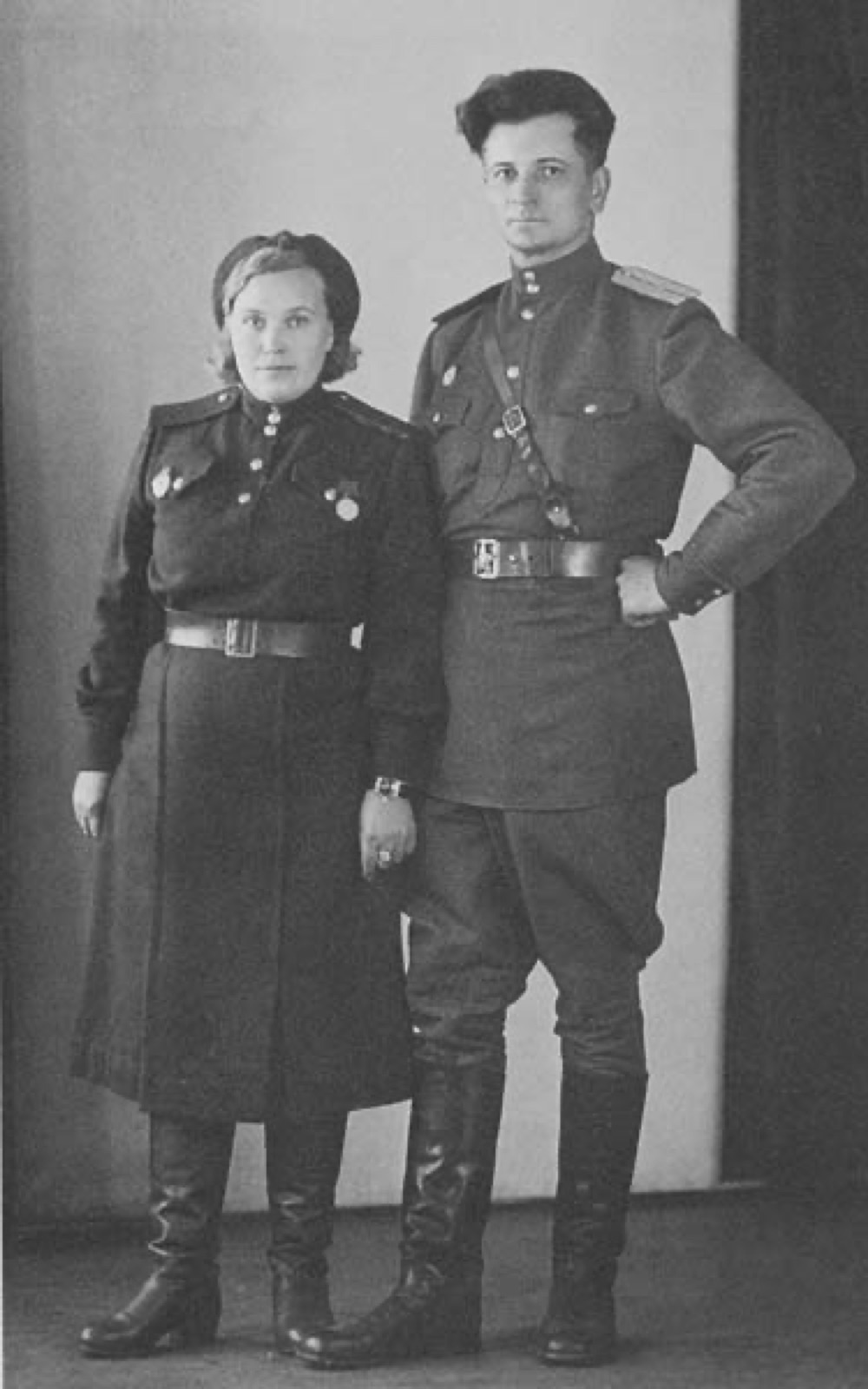
Old photographs hold information that is easy to miss. Go through old albums with relatives, write down the names of everyone shown, and pay close attention to details. Uniforms point to a particular service, school or factory. Backgrounds point to places of residence or service. Medals identify campaigns and events.
What is online
With a name and a date of birth you can search a number of public databases — for veterans of the Great Patriotic War, for victims of repression, for participants of particular events:
- Pamyat Naroda (Memory of the People)
- Memorial (OBD)
- Podvig Naroda (the Feat of the People — wartime awards)
- Bessmertny Polk (the Immortal Regiment)
- PomniPro
- Soldat.ru
- Pobediteli (Victors)
- Yad Vashem
- Lichnoe Delo Kazhdogo (Personal File of Each)
A good general resource is VGD (vgd.ru) — the All-Russian Genealogical Tree forum, where people share research, find namesakes and exchange material. Plenty of useful information sits online if you look for it.
Archives
After the open sources are exhausted, the next step is the archives. If you have gaps in basic civil information, start with the ZAGS (civil registry office), which holds records of birth, marriage, death and changes of name. They issue duplicates against proof of kinship. From there you move to the regional state archives. Some have begun digitising, but the share of digitised material is still small. Most requests are still on paper. Requests fall into three types:
- thematic — information about a particular event or fact, often biographical
- genealogical — establishing kinship between named individuals
- social and legal — documents to secure rights or interests of citizens or organisations
A workable request includes who is asking, a postal address for the reply, a clear statement of what information you need, and the geographic and chronological frame of the search. Vague requests asking for "anything" get nothing back.
Parish registers (metric books)
Parish registers — metricheskie knigi — are the official birth, marriage and death records kept by churches and, later, by civil authorities. Until 1918 they were the main civil registration system in Russia. They contain dates, names of parents, godparents and witnesses, places of residence, occasionally social estate. They sit in regional state archives, organised by parish and year. Some entries are in languages other than Russian — Latin for Catholic parishes, Hebrew for Jewish records, Arabic for Muslim communities — and the script and formulas vary with the tradition. That part of the work is its own skill.
Software for family trees
Once you have collected the data, you need to structure it. A number of programs can hold a family tree:
- Family Tree Builder
- Drevo Zhizni (Tree of Life)
- Semeynaya Letopis (Family Chronicle)
- Genopro
- RootsMagic Essentials
- Gramps
- SimTree
- MyHeritage
Family Tree Builder and Drevo Zhizni both produce clear, well-organised tables, with strong search tools that accept many criteria. You can attach contacts, life events and photographs to each person. They integrate with social networks and cloud storage and export to several formats. Semeynaya Letopis is friendlier for people who think in albums, with a clean interface and hints for newcomers; it integrates with Google Maps to attach places to people. Genopro accepts the kinds of details most programs ignore — beyond the standard biography, it accommodates personal facts. RootsMagic Essentials has all the templates you need, a clear interface, plenty of fields and the option to add custom ones; it can also assemble a book. The only catch is that it has no Russian-language support. Gramps is free and capable — graphs, filters, reports, GEDCOM support. SimTree is the simplest of them, light enough to run from external media; the downside is that it cannot search online sources. MyHeritage builds trees, searches records and photographs, identifies matches and supports DNA-derived ethnic estimates; it also has a large records database.
When to call a professional
A professional genealogist knows what each archive holds and how to write a request that works. If you have no time to learn the software, no taste for parsing 19th-century handwriting, no patience to wait three months for an answer that turns out to be a refusal — handing the work over is sensible. We can look at what you already have, tell you honestly how far the search is likely to go and what it will take. Aimless wandering through archives wastes time and ends in frustration. Knowing where to write and what to ask for produces results. A family tree, whether you build it yourself or commission it, becomes a source of memory, pride and a starting point for the next generation.