
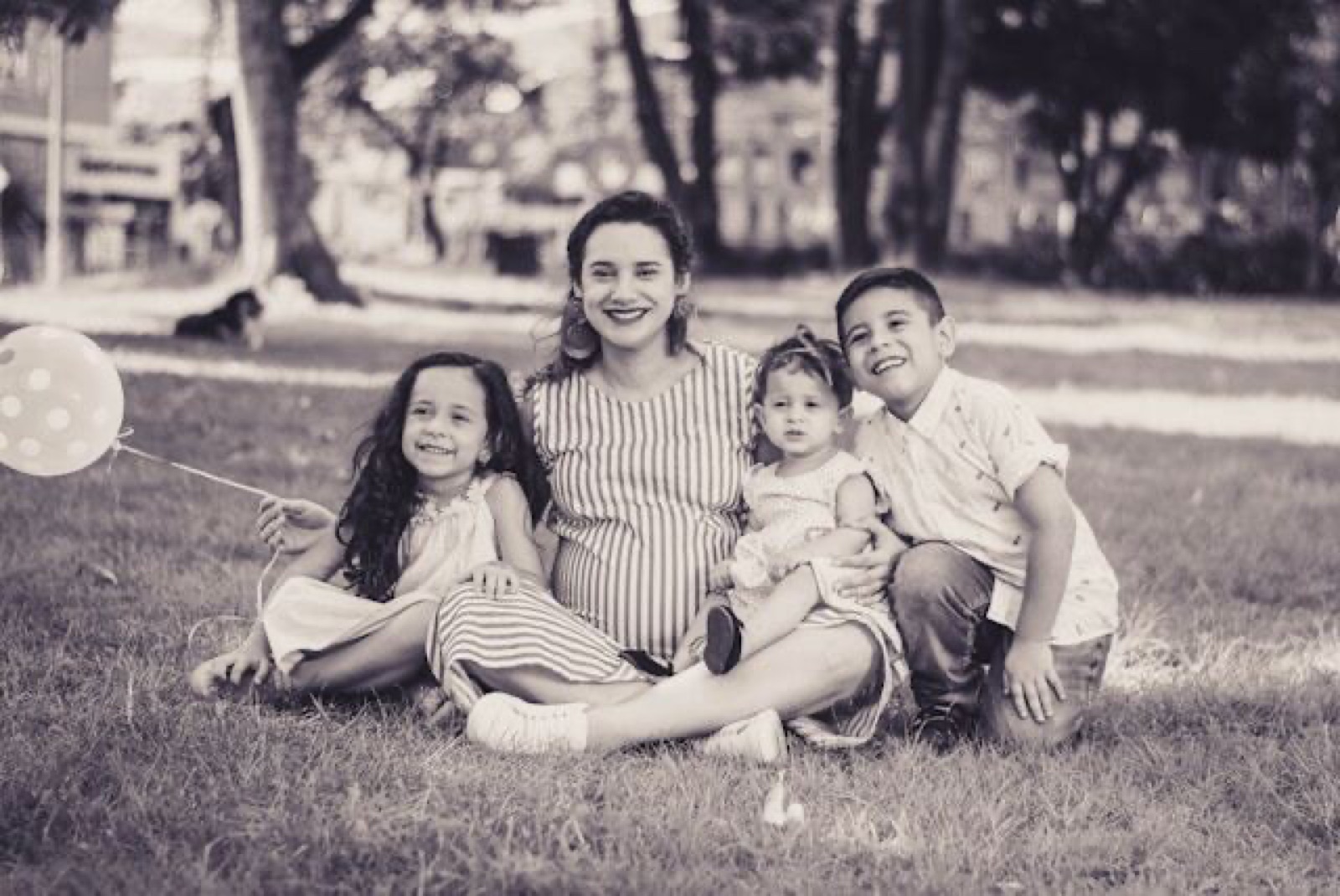
A family tree gives you a visual map of who is related to whom across generations. Many families lose that map within two or three lifetimes — names get forgotten, photographs lose their captions, the people who could explain are no longer alive. Genealogy is the practical work of putting it back together.
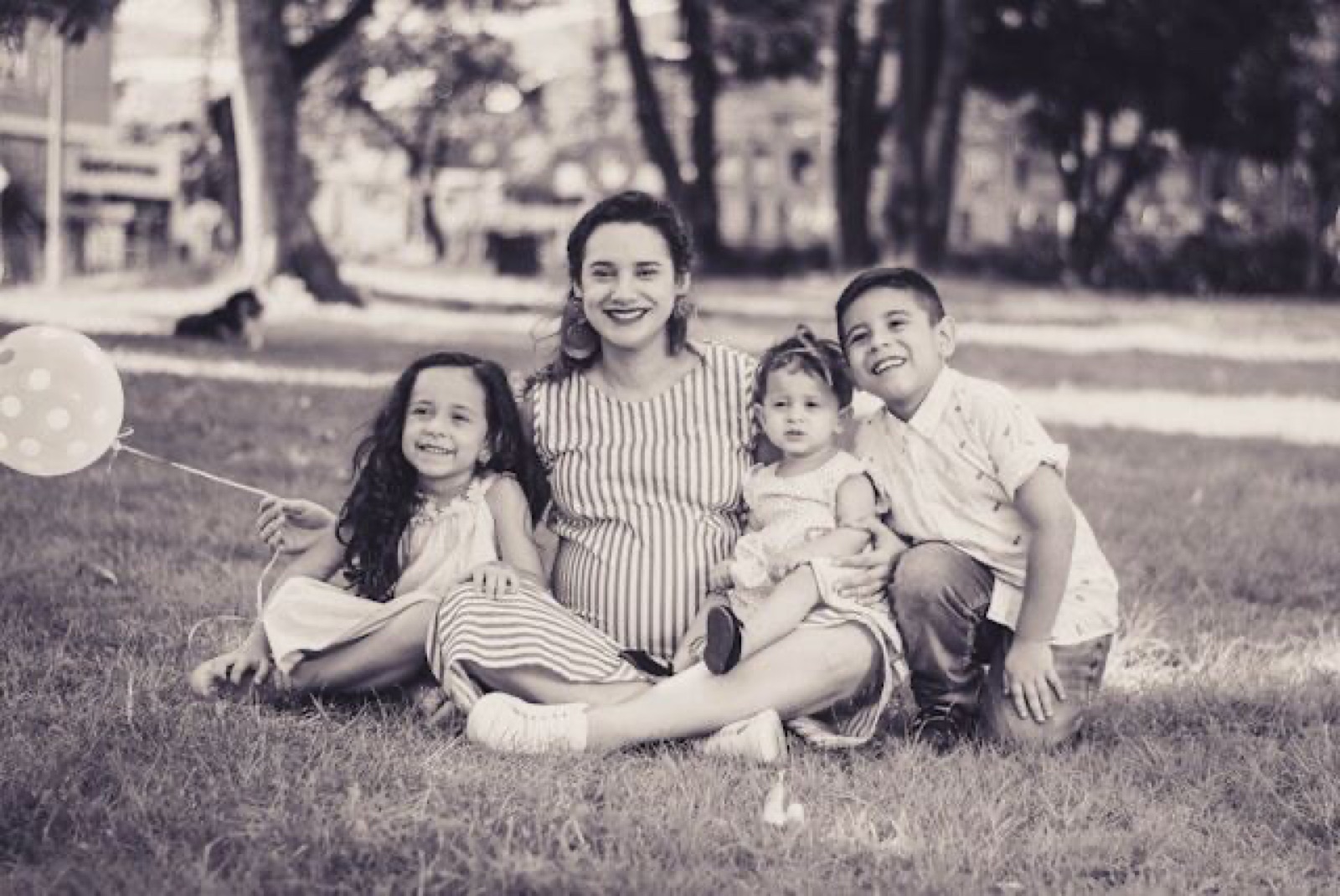
You can do most of the early work yourself. The first three generations usually live in the family's own memory, in someone's shoebox of documents, or in a free online database. The point at which a professional starts to make a difference is later, when the work moves into pre-revolutionary archives written in Church Slavonic.
Where genealogy actually starts
Genealogy is a method, not a mystery. It uses ordinary record types — civil registry entries, parish books, census-like revision lists, military records, work books — and pieces them together into a chain of evidence. Every claim on the tree should be backed by a specific document, not by what someone half-remembered.
What is a family tree, exactly?
It is a structured diagram of biological and marital relationships between people in one family across generations. For each person you record the basics: full name, date and place of birth, marriage, death. Many people also add a photo, occupation and a one-line description. The form is up to you — a clean schematic, an illustrated chart, a hand-painted artwork. The content matters more than the layout.
Why bother?
Two practical reasons. First, the older generation will not be there forever, and most of what they remember is undocumented. Second, every year the archives become more accessible, and starting now means you can capture both — the living memory and the records — while both still exist. A tree is also one of the few inheritances that does not depreciate.
Step one: prepare before you collect
Almost everyone starts in the wrong order — they begin photographing documents, talking to relatives, googling, and three months later they have a chaotic folder no one can read. Spend an evening setting up first.
Set up a simple system
A working spreadsheet is enough. Columns: full name, date of birth, place of birth, marriage, date of death, place of death, source of each fact. One row per person. Number the generations from yourself outward: you are generation 1, your parents generation 2, grandparents generation 3 and so on. The numbering will save you a lot of time when you start working with archives where queries are usually filed by generation.
Keep your paternal and maternal lines on separate sheets. They will diverge fast — different villages, different surnames, different archives — and merging them in one sheet becomes unmanageable around the great-grandparent level.
Decide what you actually want
A pedigree chart for one bloodline back five generations is a different project from a full extended family with siblings, cousins and in-laws. Both are valid. Knowing which you want will tell you when to stop collecting names and start digging deeper.
Step two: sources, in the order to use them
Work from the cheap and easy to the slow and expensive. In that order, the sources usually look like this.
Home archive and photographs
Start with what is already in the flat. Look for birth, marriage and death certificates, old-style passports (the kind issued before 1997 — they list place of birth and previous addresses), military booklets, work record books, diplomas, awards, wills, letters with return addresses, and any photograph with anything written on the back.
Photograph all of it in high resolution and save it to cloud storage. The paper will not outlive the family. The scan probably will.
Conversations with living relatives
Sit down with the oldest people in the family and ask in a structured way. Three questions, repeated for every person you discuss: what (the event — birth, marriage, move, death), where (the place — village, district, employer), when (the date or at least the decade). Record the conversation. Your memory of what was said an hour later is not reliable enough.
Speak to relatives you barely know as well. Distant cousins on the other side of the country sometimes hold the only surviving photograph of a great-grandparent. They are also the only people who will tell you, casually and in passing, that one of your ancestors was a priest or was sent to a camp.
Online databases
Several large databases are free and indexed by surname. They will rarely give you a complete answer, but they give you a scaffold. The ones worth starting with for a Russian or Soviet line:
- Memory of the People and OBD Memorial — Defence Ministry databases on WWII military service, casualties and awards
- Open List — the open database of victims of Soviet political repression
- VGD (vgd.ru) — the largest Russian genealogy forum, with regional sub-forums by province
- FamilySearch — free, with digitised parish books from many regions
- MyHeritage and Geni — international family-tree platforms with surname matching
Treat them as leads, not as evidence. Cross-check anything you find against an original document before writing it on the tree.
State and regional archives
This is where the work changes character. State archives hold parish books (until the 1920s these were the main civil records), revision lists (a census-like instrument used through the 18th and 19th centuries), and a wide range of estate, military and church records. Most archives accept written queries by post or email, but for serious research you will eventually need to read the files in person or send someone who can.
A civil-registry office (ZAGS) keeps records from the 1920s onward. For earlier ancestry you go from the ZAGS to the regional state archive that holds the older volumes.
Ministry and departmental archives
Military, police, security service, court and party archives keep their own records. If an ancestor was a soldier, a policeman, a party member, a defendant or a prisoner, the most informative documents are in those collections. Access is usually conditional — you need to prove kinship and explain the purpose of the request.
Church records
For pre-1917 ancestry, parish books are the single most important source. Birth, baptism, marriage and burial were all recorded by the priest. The handwriting is unfamiliar, the language can be Church Slavonic, and the structure of each entry follows its own conventions. This is the point at which most amateur genealogists ask for help.
Visual form: how to present the tree
Once you have the data, you can present it in several ways. Pick the form that matches the story you want to tell.
Layout choices
Three common ones. Ascending — start with yourself at the bottom and work upward to your ancestors. Most beginners use this format because it matches the way you actually collect data. Descending — start with a distant ancestor at the top and trace forward to the living generation. Useful when you want to show all descendants of one founding figure. Radial — the subject sits at the centre with rings of ancestors radiating outward. Visually striking, harder to print at scale.
Software
For day-to-day work, any of these is enough:
- MyHeritage — international, with surname-matching across other users' trees
- Drevo Zhizni — Russian-language, strong on local conventions
- Geni — collaborative, multiple family members can edit the same tree
- A simple spreadsheet — slower but never breaks
For a presentation copy — something to hang on a wall or give as a present — the data still lives in software, but the final design is usually done in a vector editor or by hand. Calligraphy and watercolour give a printed chart a different weight from a screenshot.
When you hit a wall
Most self-research stops at around the third or fourth generation. Common reasons.
Missing documents
A certificate has been lost, an archive burned during a war, the village was renamed in 1924 and again in 1962. The path is usually not to give up but to substitute: photographs (clothing, background, props can locate them in time), house books and address lists, parish records of a neighbouring village, employer records, military musters, court files. Genealogy is rarely the story of one document — it is dozens of small confirmations that together build a chain.
Too much information, badly organised
The opposite problem. Three hundred names, half of them undated, no clear sources. Solution: rebuild from the spreadsheet. One row per person, one column per fact, one column for the source of that fact. If a fact has no source, mark it as a hypothesis until you can find one.
When a professional is worth the money
A few patterns we see often.
You have hit pre-1917 and the handwriting has stopped making sense. Parish books in 19th-century clerk's cursive take training to read, and a wrong reading of a place name can send you to the wrong archive for the next year. A genealogist who works with these documents daily reads them three to five times faster than someone learning from scratch.
Your family came from what is now Lithuania, Poland, Belarus, Georgia or Central Asia. Cross-border research needs language, contacts and knowledge of foreign archive systems. Doing it remotely from another country usually fails on logistics.
You have specific reasons that require evidentiary quality — passport applications, restitution claims, restoration of nationality. Those need certified copies and a paper trail that holds up in front of a consul or a court, not just a printed chart.
What it costs
For a serious genealogical investigation in Russia, the cost depends on how many ancestral lines you want covered, how deep you want to go, and how much travel between archives is needed. The figures we quote start around 190,000 ₽ for one line researched in depth, and rise with the number of lines and the number of regions involved. Most of the cost is human time inside the reading rooms.
A consultation of about half an hour usually costs nothing more than half an hour. It will tell you whether the work is realistic, what records are likely to exist, and what the order of magnitude will be. For many people, that conversation is enough to decide whether to attempt the work themselves or hand it over.
What you can do with the result
A finished tree is a starting point, not an end. It opens several doors at once.
Travel — visiting the villages and parishes where your ancestors lived is a different experience once you know who was there. Health — knowing medical patterns across several generations of relatives is increasingly useful as genetic testing becomes mainstream. Identity — restoring national or religious belonging that was hidden during the Soviet period. Inheritance — passing the work to children in a form they will actually keep, usually a printed family book rather than a folder of scans.
In closing
A tree is a small structure with a very large amount of work behind it. Most of that work is patient — sit down with the old people, photograph what is in the drawers, work through the databases, then through the archives. Some of it is technical and is faster in someone else's hands. The point of starting is that next year there will be one less interview to record.


