A surname is the family name, the one that marks belonging to a particular family or clan and passes from parent to child. The thing we take for granted today is fairly recent. It did not arrive all at once.
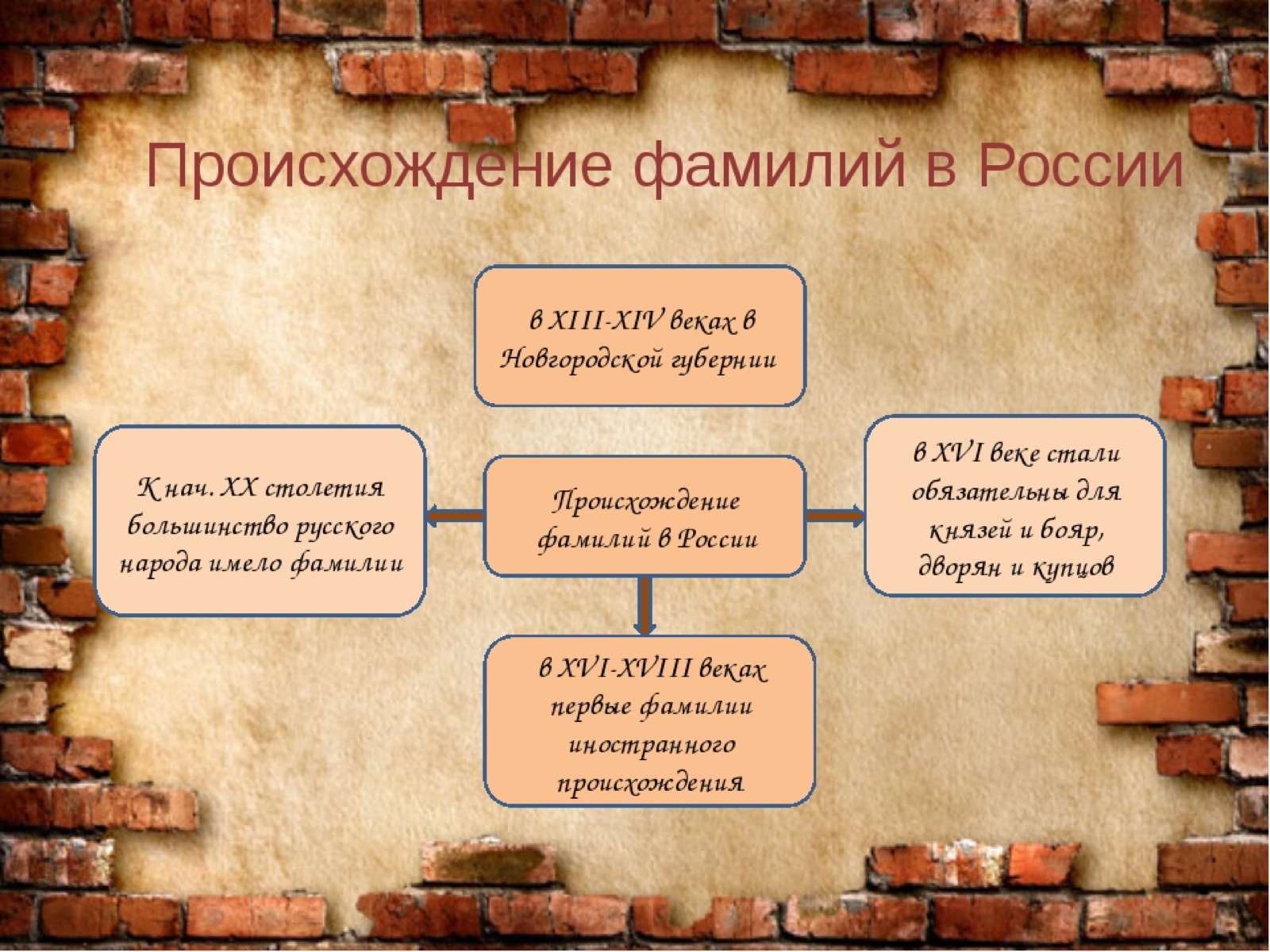
How surnames spread through Russian society
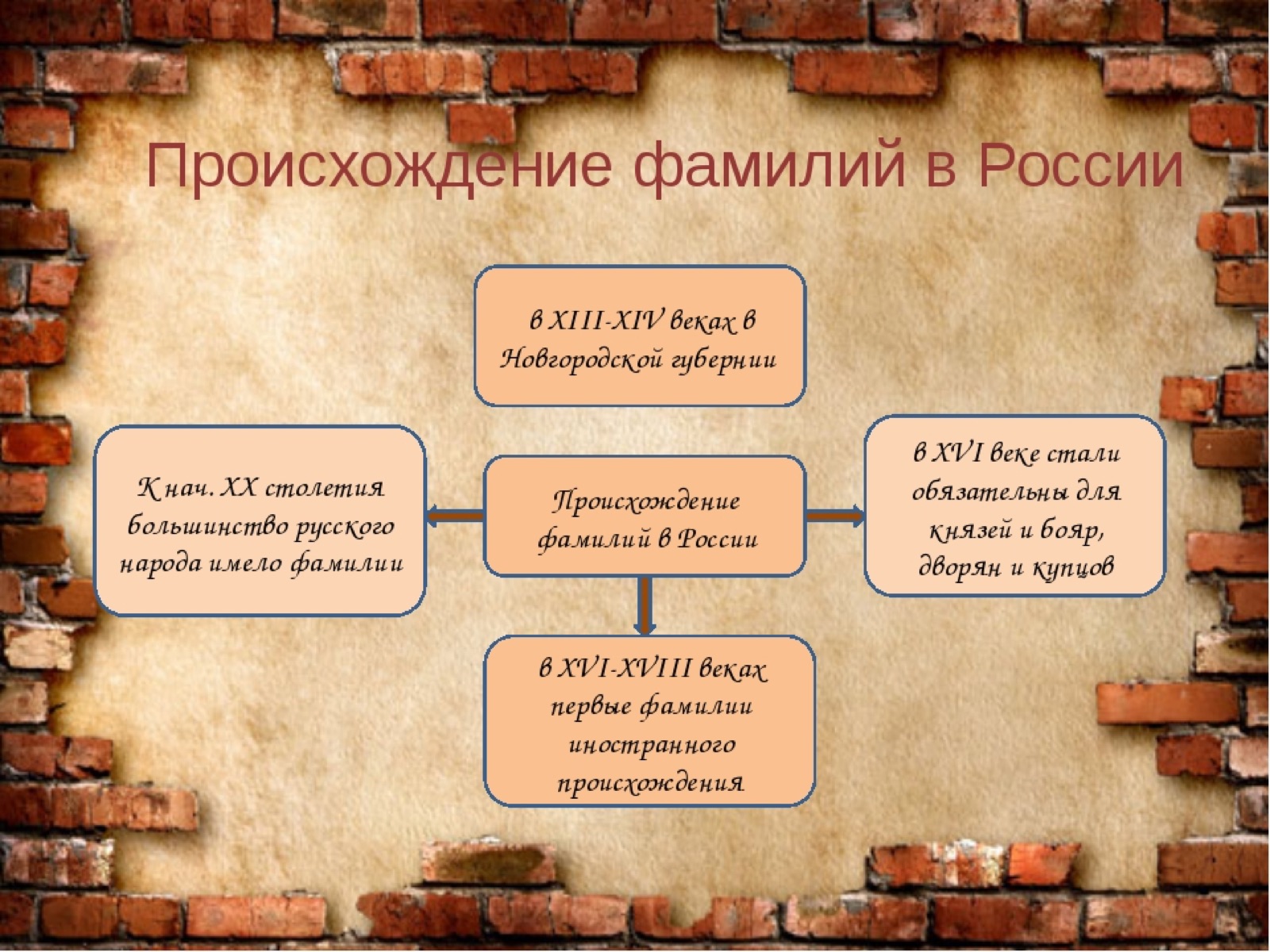
In the early chronicles, people were named by their given name and by whose son they were, or where they came from. By the 13th century the documents include nicknames that described a particular person, but those were personal, not inherited. The shift to inherited surnames started with the nobility and the wealthy. Peasants had nothing to pass on and depended entirely on the will of the landowner; nobody cared about their kinship lines. The nobility needed to prove their origin and their kinship with known figures, and they held lands that were lost and regained through military campaigns. To claim a returned estate, the heir had to prove his right. A confirmed lineage helped at court too — it could secure a position. As the state grew, the better offices became something to hold for life and to pass on. Court registers listed the boyars and noblemen, recording who served where and at what. A simple first name and patronymic stopped being enough. A surname allowed even an unknown descendant to claim a position by family.
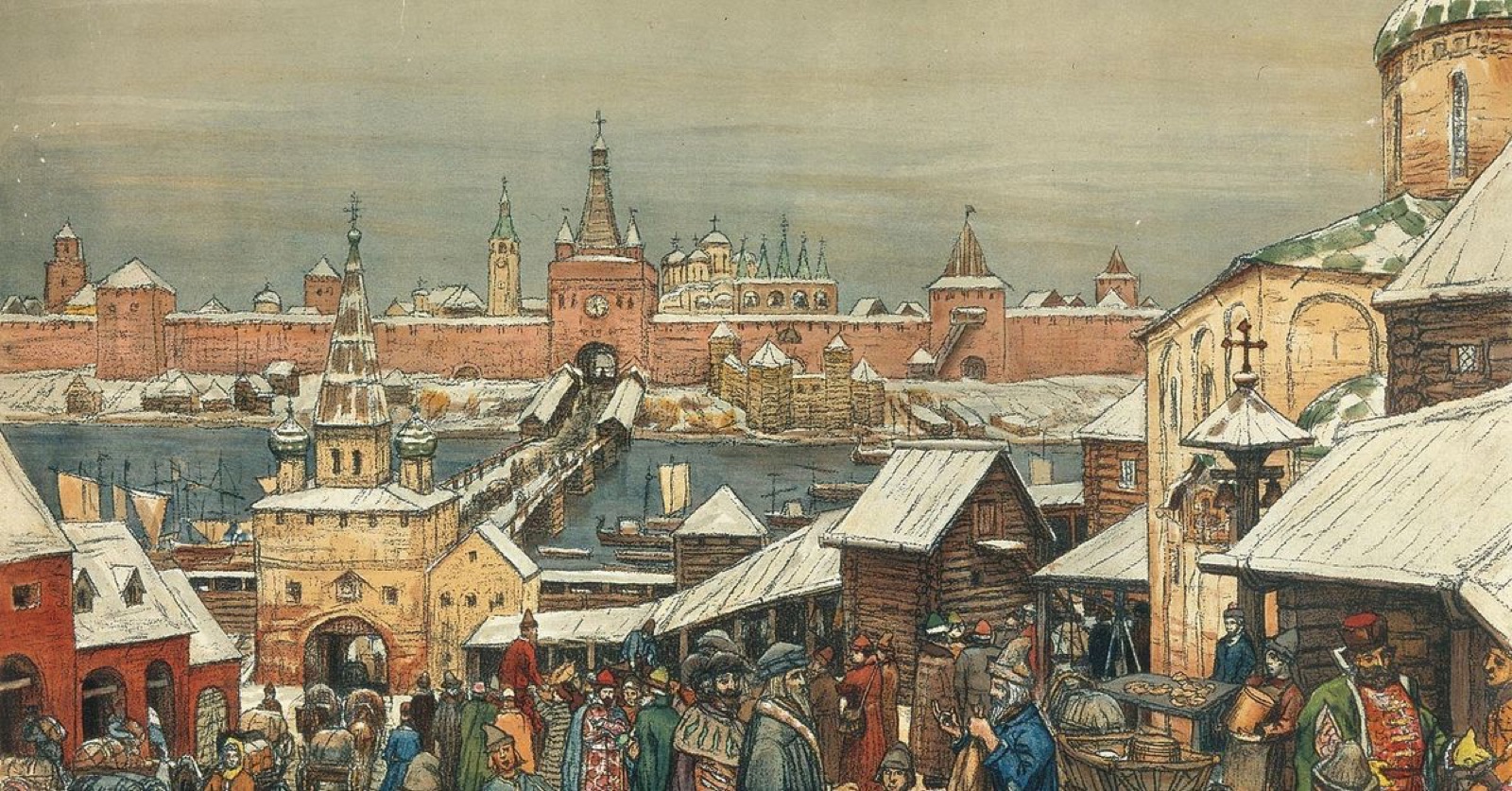
The first surnames in Rus appeared among the residents of Nizhny Novgorod.
Noble surnames
The princely and boyar families often took their surnames from the lands they owned, locking the property into the name. Holders of the estate on the Shuya river became Shuysky, on the Meshchera — Meshchersky, on the Vyazma — Vyazemsky. The same pattern produced the Tverskys, Obolenskys, Vorotynskys. State service gave nicknames that stuck — Lyko became Lykovs, Skryaba became Skryabins, Kobyla became Kobylins, Gagara became Gagarins. When two well-known dynasties married, the heir often took a double surname to anchor the claim to both lines and to lands. Sometimes a strong figure within a famous family renamed the whole dynasty after himself: the Romanovs descend from the boyar lines of Koshkin, Kobylin and Yuryev. Tatar warriors who entered Russian service took surnames from their own names: Yusup became Prince Yusupov, Akhmat became Akhmatov, Kara-Murza became Karamzin. The same logic transformed foreign surnames. The German nobleman von Wiesen became Fonvizin; the English aristocrat Learmonth who served at the Russian court became Lermontov. Surnames given to illegitimate children sometimes carried meaning in French or German: Sherov from cher (dear), Amantov from amant (beloved), Herzen from Herz (heart). Other parents simply clipped their own surname for such a child — Repnin became Pnin, Trubetskoy became Betskoy, Yelagin became Agin, Golitsyn became Go, Tenishev became Te.
The clergy
Surnames among priests took several paths. At first, parish priests had only first names, and villagers called their children Popov (from pop, priest). If a priest's son refused ordination, he and his line kept the name Popov. When priests had to take surnames officially, many were named after their parish or after church feasts: Preobrazhensky, Troitsky, Uspensky, Pokrovsky, Rozhdestvensky, Blagoveshchensky. The Slavic-Greek-Latin Academy, founded in 1687, needed surnames for its register. Students often invented their own — pleasant-sounding, or with Greek and Latin roots to mark a personal quality. Tikhomirov for the calm. Liperovsky for the sad. Gilyarovsky for the cheerful. Some translated their Russian surnames into Latin to make them sound nobler: Kastorsky from castor (beaver) instead of plain Bobrov; Skvortsov became Sturnitsky from sturnus; Orlov became Akvilev from aquila.
Peasant surnames
Until serfdom was abolished, only free people had surnames. Peasants of the Novgorod region — always the more progressive corner — were the first to take them. Peasant surnames usually came from the father: Andreyev, Timokhin, Alekseyev, Ivanov. The other common sources were:
- personal traits — Smirnov (the quiet one), Ozornov (the mischief-maker)
- occupations — Kuznetsov (smith), Konyukhov (groom), Rybakov (fisherman)
- nicknames — Bykov (bull), Samoyedov, Sokolov (falcon)
- sometimes criminal connotations — Kozyrev, Korolev, Razuvayev
Boys often received protective names, the kind meant to work by opposites and ward off evil spirits. Call a child Dur (fool) and he will turn out clever. Call him Nekras (ugly) and he will be handsome. Call him Golod (hunger) and he will be well fed. The names stuck and became surnames: Nekrasov, Golodov, Negodyaev, Durov. People also believed an animal name passed on the animal's qualities — strength, agility, sharp eyes, cunning. That is the origin of the long list of Russian surnames built from animal names.
Finding the origin of your own surname
Plenty of websites promise the history of your surname in two minutes. Each surname has its own story. If you don't want to dig into the actual genealogy and trace the ancestor the line started from, those generic descriptions will do. But a surname is something passed down. Even a small piece of real information about your own family is worth the effort. Knowing what your surname meant, who started the line, what work they did — that is not trivial. Children and adults both listen to that kind of story. A professional researcher will get further, with more depth and with the documents to back it up.