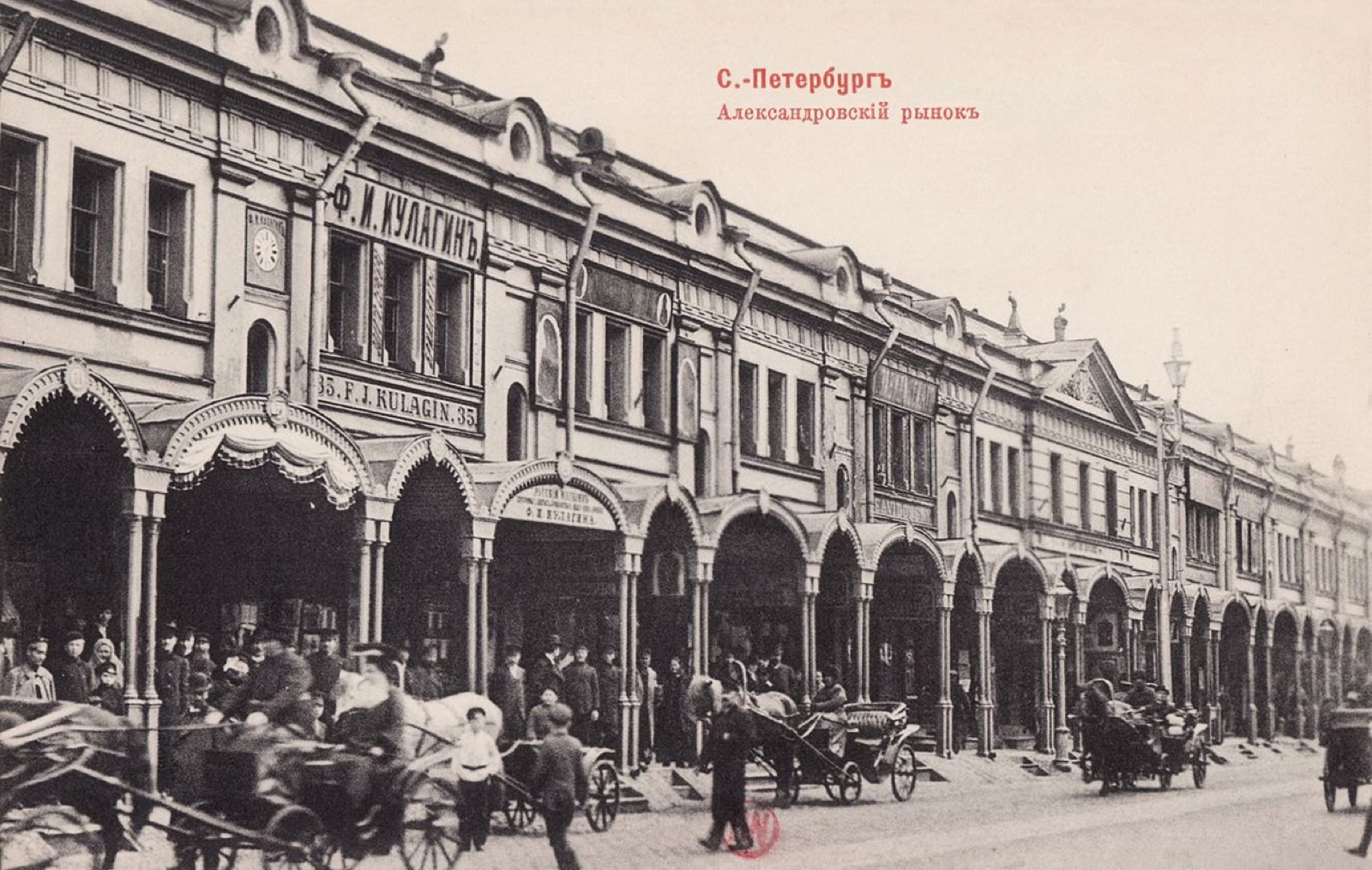
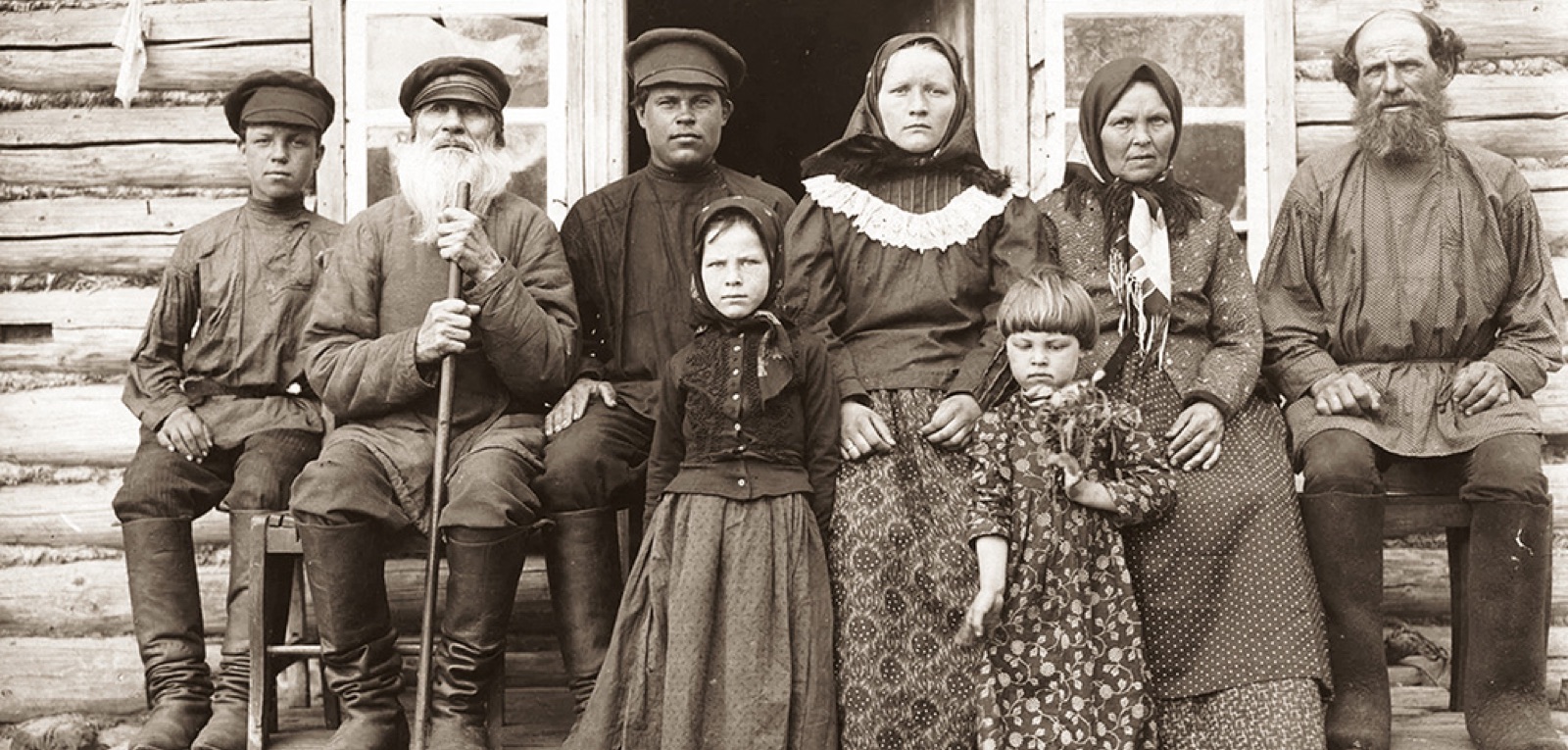
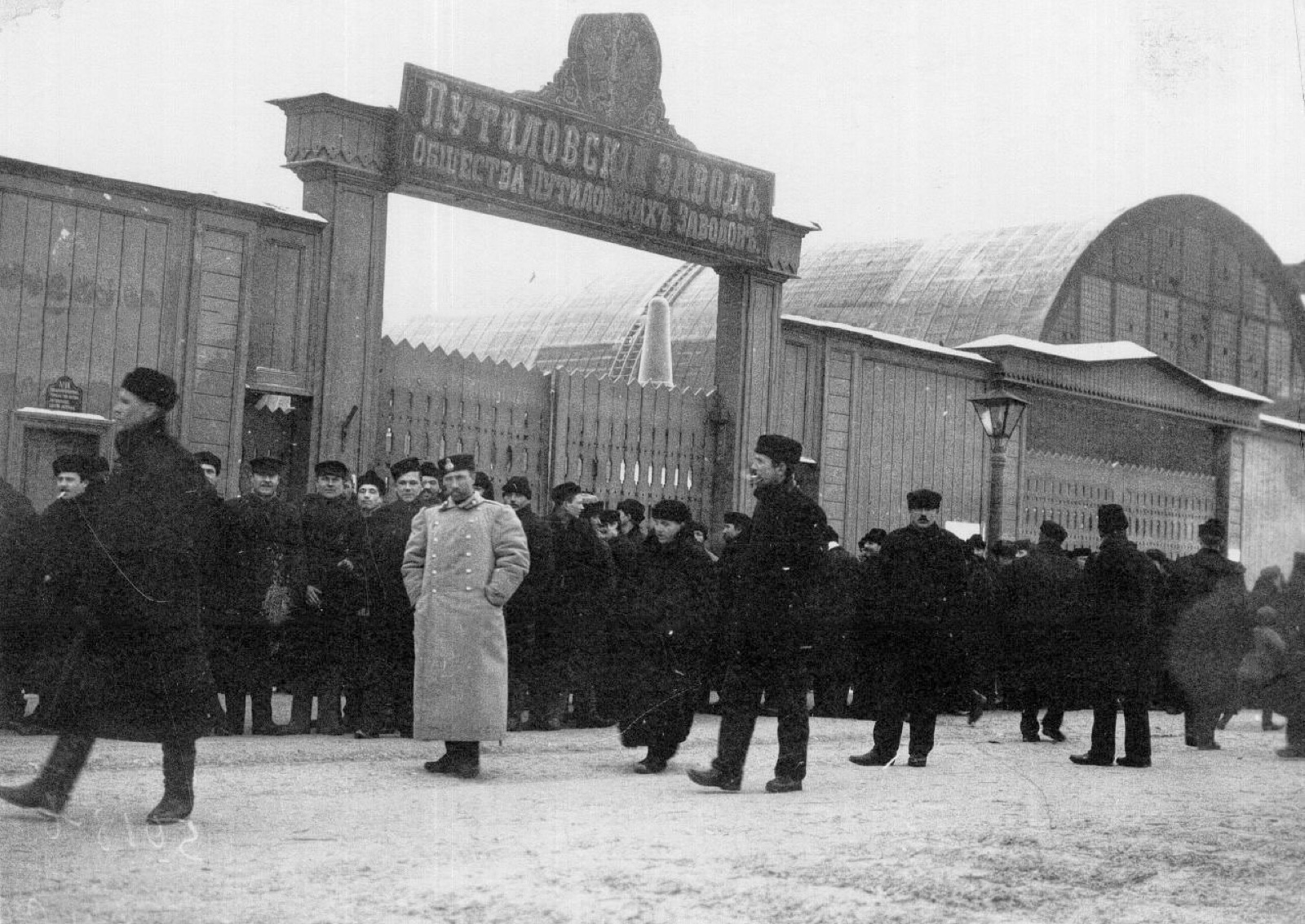
A common picture of tsarist Russia: a population of illiterate, dark peasants. The claim is sometimes disputed, sometimes defended. Which way it lands depends on what the person making it wants to prove — the merit of the imperial regime, or the merit of the Soviet one that followed. What was the actual state of literacy in the country?
Was the literacy of tsarist Russia a myth?
Compulsory education had been on the agenda since Peter I, in the eighteenth century. His plan: arithmetic schools, with officials and nobles required to enrol their children between ten and fifteen. Later, the order was extended to other classes. In practice, the schools ran badly. Students escaped, teachers avoided lessons, and by the middle of the eighteenth century most of these institutions had closed. Later rulers reopened schools, mostly without success.
The question of popular education came up in church councils and the Synod, edicts were issued, but funding for buildings and salaries usually was not. Debates kept circling back to the same conclusion: literacy was not the most urgent problem of the day. The pro-education camp pointed to neighbouring states where schools were everywhere. The opposing camp said giving education to "the common people" was a mistake.
The early nineteenth century
The disagreements continued. New regulations were issued, and the system of schools was divided into four ranks:
- parish schools
- district schools
- gubernia schools and gymnasiums
- universities
A constant obstacle was the shortage of qualified teachers. The institutes, seminaries, and gymnasiums of the country produced too few teachers for the number of illiterate people to be taught. Funding was supposed to come from the people themselves — peasants, landowners, townspeople. Often the schools simply did not open, or closed within months. In 1856, with a population of 63.8 million, the Russian Empire had only 8,227 primary schools and 450,000 pupils. Half the schools were parish schools. For that population, the number was tiny. And yet private schools were forbidden, with that side of the trade actively suppressed.
The decisive change was the abolition of serfdom in 1861. The Ministry of Public Education ran all educational institutions in the empire apart from those run by the church, which stayed under the Synod. In 1857 the ban on private schools was lifted. School curricula varied by period — Russian language (particularly for non-Orthodox communities), reading, writing, religious instruction, ethics, the four operations of arithmetic, rural household management. Inspectors checked the political reliability of teachers.
The 1897 census recorded 27% of the population as literate. The figure excluded children under nine. To count as literate, a person had to be able to read syllabically. The rate varied enormously between provinces. The highest literacy was in:
- the Grand Duchy of Finland
- the Baltic provinces
- Yaroslavl
- St Petersburg
- Moscow
The further a gubernia lay from European Russia, the higher the share of the illiterate. Urban literacy was higher than rural.
The early twentieth century
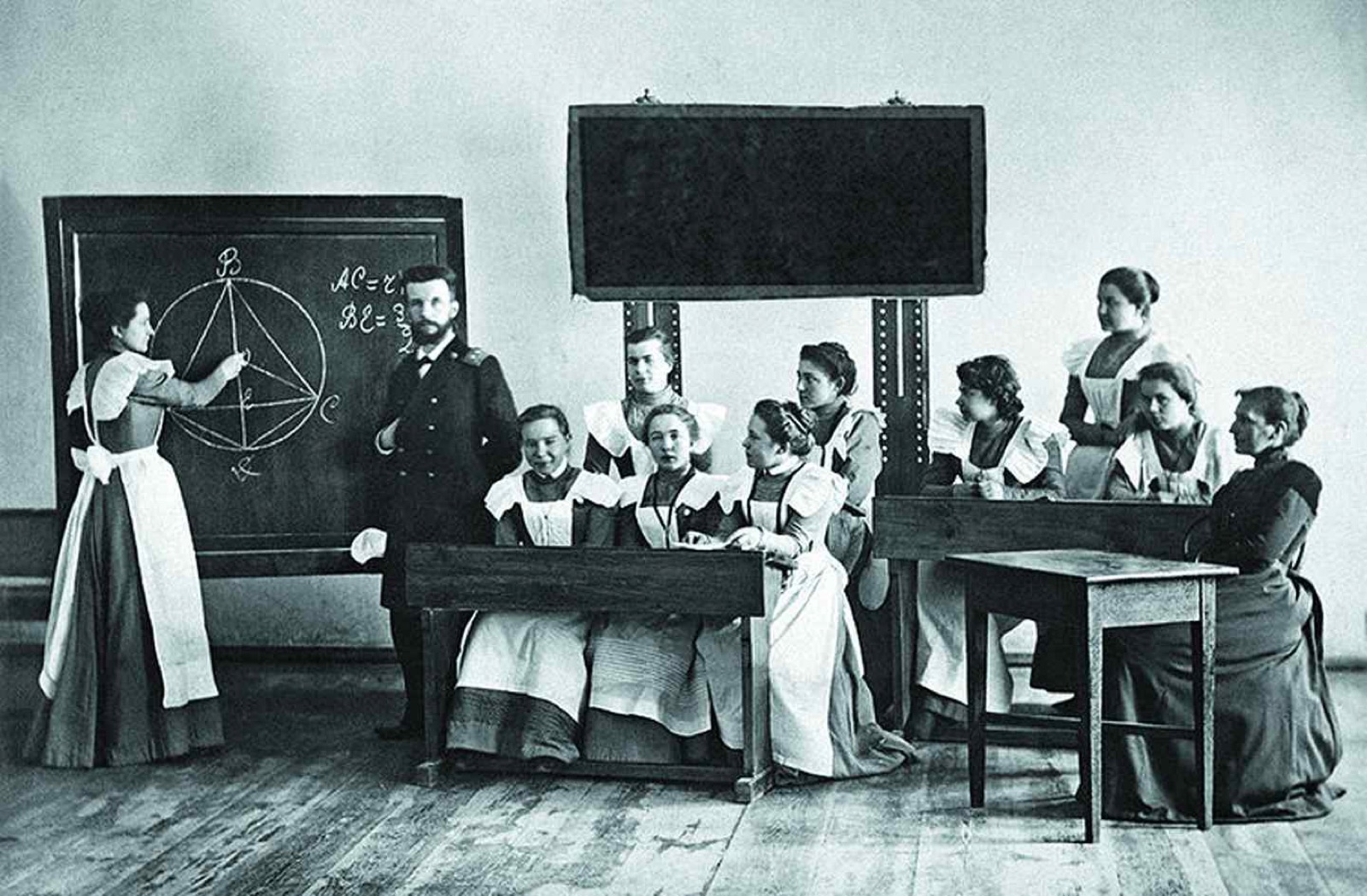
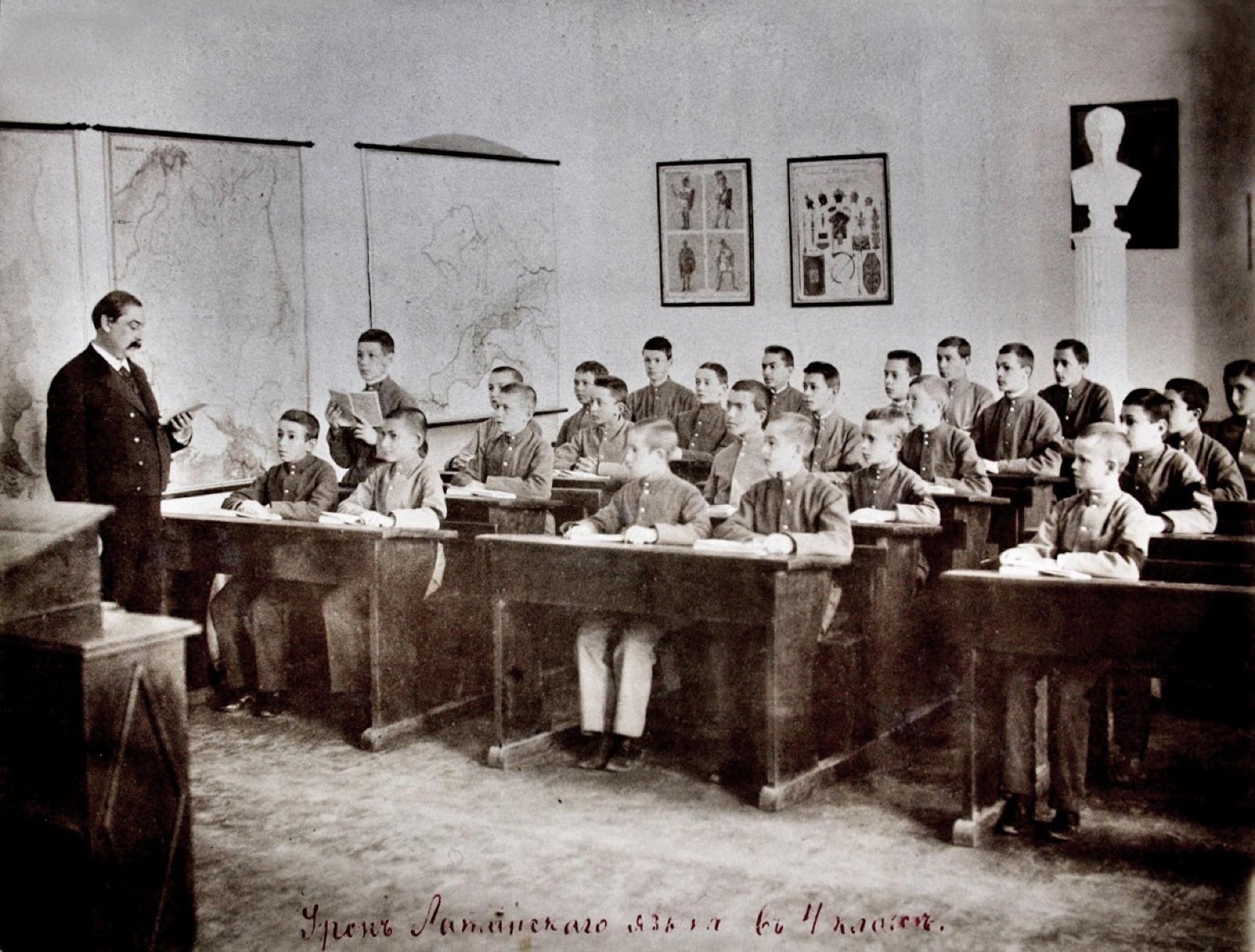
The number of educational institutions grew, particularly in primary education. Around 57,000 new primary schools opened. Major industrial enterprises set up evening and Sunday classes for illiterate workers. From 1908, primary education in the Russian Empire became free, which moved the literacy curve sharply upwards. The state budget allocated some 300 million roubles to public education. By 1914 there were 53 teacher-training institutes and 208 teachers' seminaries. Education reforms aimed at a unified system. By 1915 the educational ladder looked like this:
- primary education — 3 to 4 years
- post-primary (first years of gymnasium, primary higher or vocational schools) — 4 years
- full secondary education (final years of gymnasium, secondary vocational schools) — 4 years
- higher education (universities)
- a system of adult education
By 1913, 73% of military conscripts could read and write. The number cannot be projected to the whole population, but even within the conscript cohort it had jumped from 21% in 1875. That movement is the answer to the question of whether the tsarist government was working on literacy.
After the revolution
The Soviet authorities took on the same problem from their first year. In 1917 they passed a decree on compulsory education for all children up to seventeen. The First World War, the civil war, and the resulting wave of orphans and street children slowed the spread of literacy badly. In the 1920s, much of the actual teaching was done by people without pedagogical training. Compulsory universal primary education was introduced in 1930. Only by that date was the school population restored to the level of the Russian Empire in 1917. Posters and pamphlets promoted literacy as a social duty. The practical problem was time — many workers could not combine the job and the lessons. The 1937 census found 25% of people aged ten and over still unable to read. Compulsory seven-year schooling was achieved only by 1950, once the country had absorbed the costs of the Second World War.
Village libraries
Some historians argue that the real position was rather different from the official statistics. Many peasants, particularly Old Believers, did not declare their literacy to the census-takers. Researchers of the period ran their own surveys, designed to produce more honest answers, and circulated questionnaires through the zemstvos. The official number of village schools for peasants was low. But there is plenty of evidence that peasants organised lessons for their own children once the children reached the right age — they hired a teacher, set aside a room, and paid the costs themselves. The teacher might be a literate peasant or a wandering teacher from one of the educated classes. By the late nineteenth century, peasant interest in reading attracted public notice. Vladimir zemstvo data on peasant reading habits looked like this:
- religious and moral books — 58.8%
- fiction — 23%
- agricultural literature
- reference books
Newspapers had readers, and the more prosperous peasants subscribed. From fiction, village readers knew Pushkin, Tolstoy, Mayne Reid, Mamin-Sibiryak, Milton, Gogol, Zhukovsky, Garshin, Griboyedov, Krylov, and Yershov. Short stories and folk tales were the most popular. Peasant libraries also held medical handbooks, textbooks, calendars, and journals. A large share was lubok literature — cheap illustrated books bought at fairs. Marks in the margins of surviving copies show that the books were actually read, not just kept. Not every peasant was literate, of course, and many households stayed in the old illiteracy. But the number of regular readers, of subscribers and library-builders, was growing. The demand for literacy outran what the state was supplying — which is exactly why unofficial schools spread.
Female literacy
Women at the start of the twentieth century
Literate women were fewer than literate men. This was true across many countries, not just Russia. The ratio varied widely with the social position of women. Countries that valued education for both sexes worked to close the gap. In the Russian Empire, female literacy varied by region. By 1887, the ratio of literate men to literate women was, for example:
- Petersburg uyezd — 2.1
- Peterhof — 2.8
- Schlüsselburg — 5.2
- Gdov — 9.5
- Moscow gubernia — 7.3
- Voronezh — 10.2
- Kursk — 11.7
- Novgorod gubernia — 16.4
The position of women was being reconsidered, and women's educational institutions opened. By the turn of the century, female education was receiving close attention.
So — myth or reality?
The main brake on popular education was serfdom. Before 1861 peasants saw no future in study — they could not see what reading and writing would change in their daily lives, and study cost time and effort that the harvest could not spare. Teachers were equally unmotivated, since the work paid badly and seemed to lead nowhere. Both sides lacked propaganda. The picture: peasants did not want to learn because they did not see the point, and teachers did not want to teach because they did not see prospects.
After 1861 the situation began to move. Interest in learning rose sharply. The literacy curve went up year after year through the reign of Nicholas II — but the pace was still too slow for a country that size. Critics of the regime argued that the ruling elite preferred an uneducated population because it was easier to govern. Compared to the leading countries, Russia was indeed behind. By 1913, literacy stood at:
- Britain and Germany — 99%
- United States — 93%
- Japan — 98%
- France — 95%
- Austria — 83%
Russia was still an agrarian country sitting next to industrialising ones. Nicholas II's government wanted to close the gap, but the pace was inadequate. The population itself increasingly understood the need for schooling; the size of the country and the depth of the class divisions made fast action impossible.