An old photograph of a stranger
Family Relic's genealogist Oleg Pylkov once picked up an old photo card and asked his grandmother, 'Who is this?' 'Those are your great-great-grandfather and great-great-grandmother,' she answered. In the old, time-worn photograph you could make out a man of dashing bearing, his chest hung with medals, and a woman in an old-fashioned dress.
From scraps of memory he learned that the Shevchenko family had lived in Baku. But what were these people's names, and who was the man in uniform? The grandmother could not say. The names stayed unknown, and that became the starting point of the search.
Reading the uniform: the railway gendarme police directorate
The first breakthrough came when the uniform was identified. It belonged to the Railway Gendarme Police Directorate of the Russian Empire, a special force that guarded the country's railway infrastructure.
Railway gendarmes held the status of servicemen. Each directorate, with a staff of about 120 to 130, was given a stretch of line 200 versts long. They watched over the integrity of the track and structures, kept outsiders away, and patrolled stations, depots, workshops and stores. Once a month they had to walk the whole stretch assigned to them. After 1917 the railway gendarmerie was abolished along with the Separate Corps of Gendarmes.
This was a concrete lead: if the great-great-grandfather served in a gendarme directorate, his personal file should exist in the archives.
A parish register as a bridge across generations
The next step was a search through the documents of the nearest descendants. From his grandfather's birth record, Oleg learned the grandfather's father's name and patronymic. That gave a name to search on.
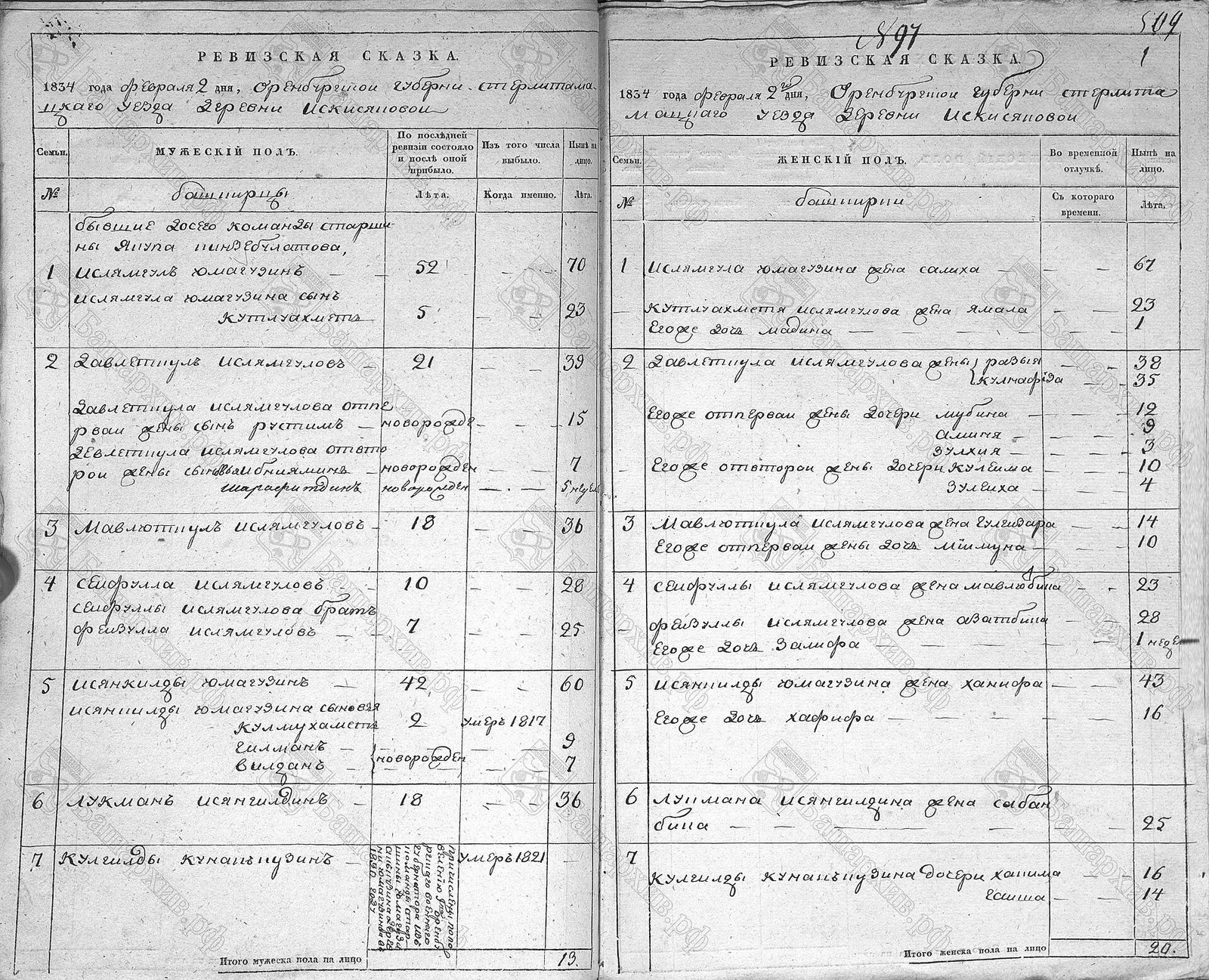
And then came what the researcher himself calls 'a small genealogical miracle'. One day, going through the pages of a 1903 parish register from the State Archive of the Republic of Bashkiria, he came across, entirely by chance, a register entry with the now-familiar names.
So, through a child's baptism record in a Bashkir church of the early 20th century, an answer came to a question that had gone unanswered for years. The names of the Shevchenko great-great-grandparents became known.
Why such finds are possible
The railway gendarme story shows several principles of professional genealogy. First: iconographic sources, photographs, uniforms, awards, can give concrete information about an ancestor's occupation. Second: when the direct route is closed (no documents on the person himself), you go through the descendants or through indirect records. Third: archives of different regions are linked through people, a man from Baku can leave a trace in a Bashkir parish register.
What the railway gendarme directorate was
For those whose ancestors served in this force: the Railway Gendarme Police Directorate was set up in the Russian Empire to keep order on railway transport. Its men held military rank, wore a distinctive uniform and answered to the Separate Corps of Gendarmes. Their personal files are held in the Russian State Military-Historical Archive (RGVIA) and in the regional archives where the unit was based.
If your family has a photograph of an ancestor in gendarme uniform, it is a valuable source for a search. From the unit number, the insignia and the awards you can often establish where the man served and find his personal file.
Have an old photo of an ancestor in uniform but do not know what he did? The genealogists at Family Relic can read uniforms and find the documents. Request a search at myrodoslovie.ru