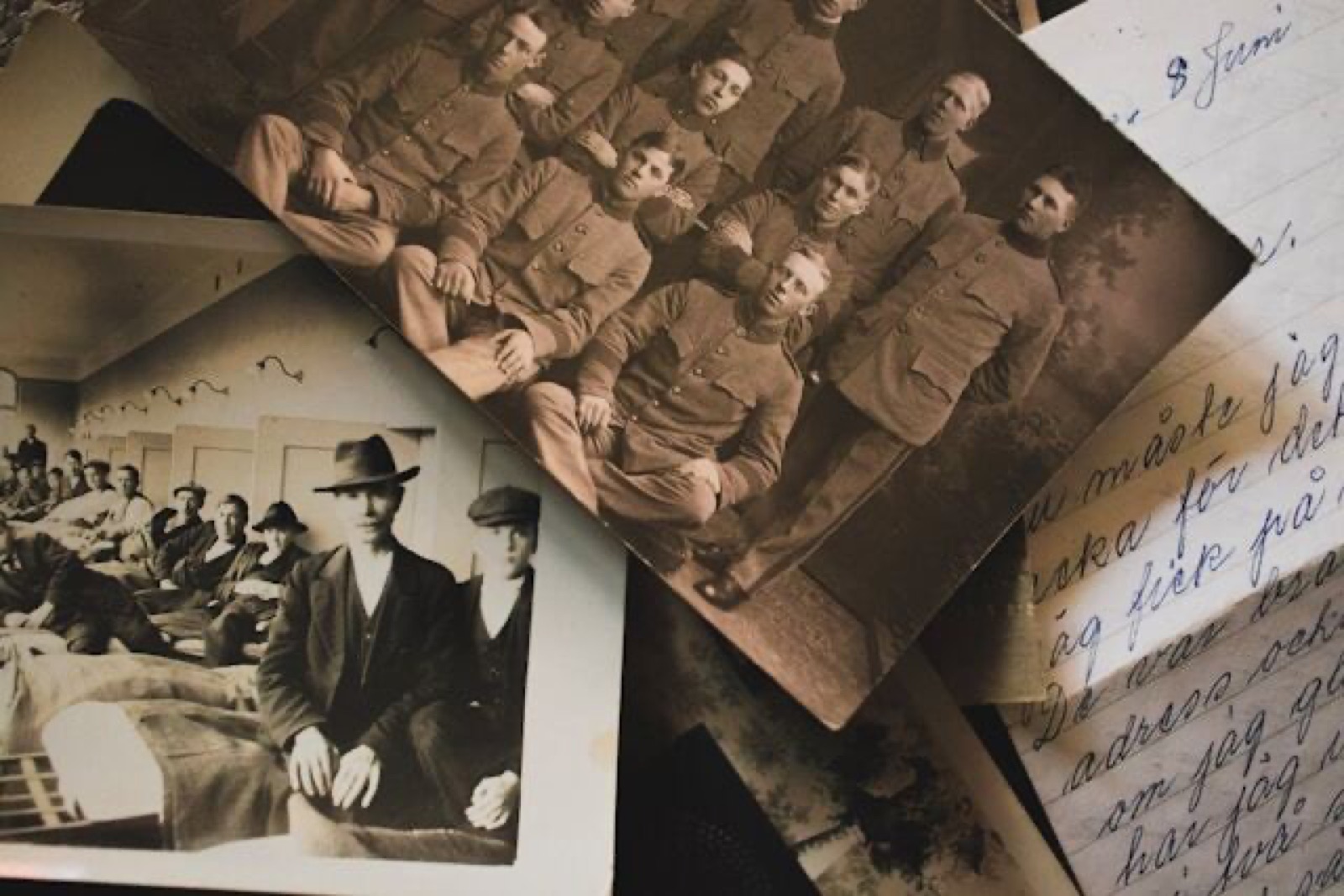
Opening an old family album, you sooner or later run into a familiar problem: time has erased the names of the people in the photographs. That moment is often what pushes someone to draw up a family tree — partly for themselves, partly so the children and grandchildren can see who came before.

Why people do this
Reasons vary. It pays to be honest about your own — clarity of motive is what gets you across the difficult middle of the project. Common reasons:
- curiosity about who came before
- tracking inherited illnesses and causes of death
- leaving something for the children and grandchildren
- a feeling of being part of a longer history
- finding out about a notable ancestor
- reconnecting with relatives lost long ago
- organising a large family reunion
Your reason may be none of the above. What matters is being clear with yourself, because there will be a moment when the work feels endless and a strong reason is what keeps it moving.
Formats for presenting a family history
A family history can take different forms:
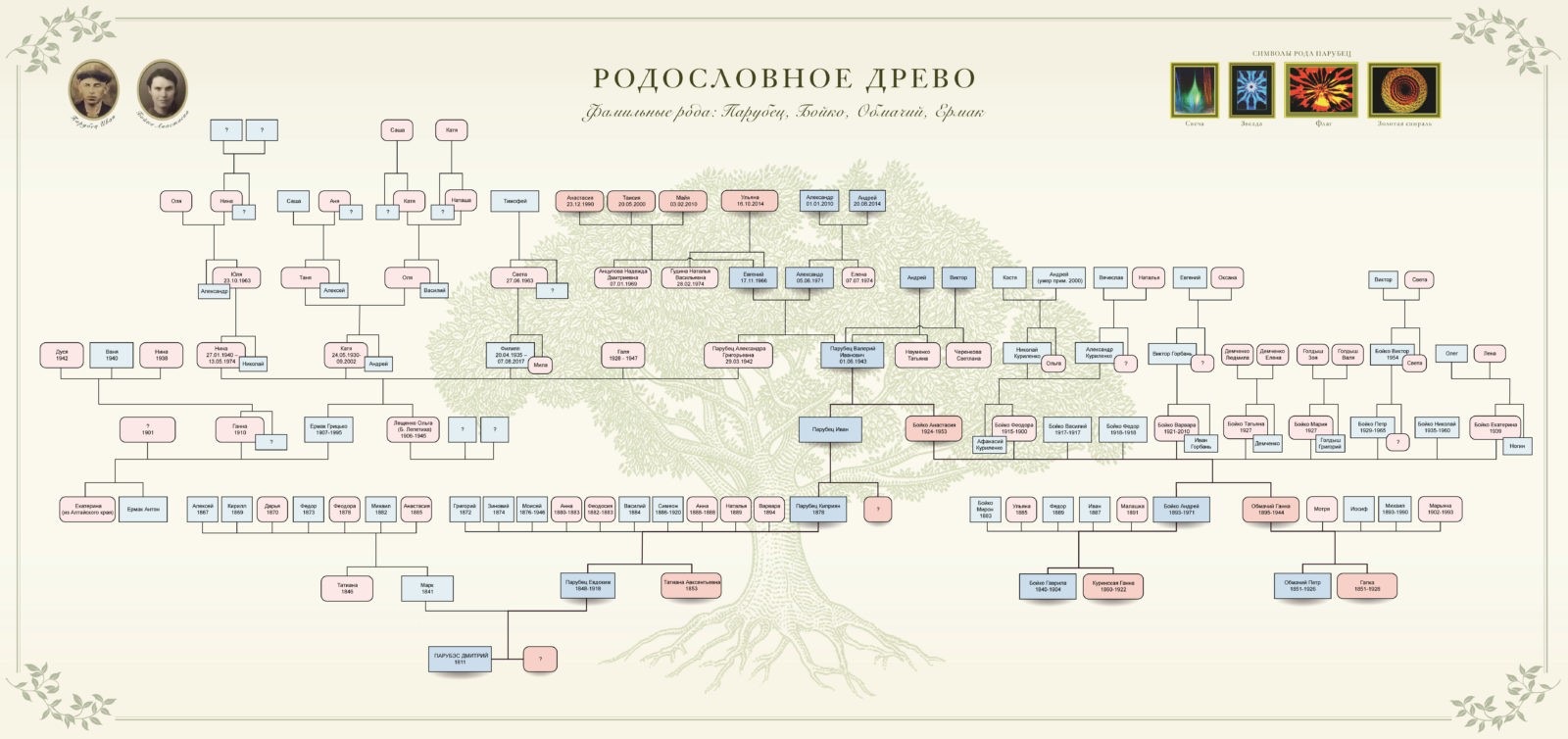
- A genealogical tree — a schematic diagram of the family with photographs or with names and dates only
- A descending or ascending pedigree — a written narrative of the kinship table
- A family archive or domestic museum — depends on space and the visual taste of whoever is putting it together
- A family book — a proper printed book with the history of the family, weaving in documents, photographs and historical context
- A film about the family — an individual short film covering the people and the places
The right format depends on the reason for the work. Each has its own strengths.
What a family tree actually is
A genealogical tree is a schematic picture of an entire family back to the earliest ancestors the researcher can identify. The tree shape is fitting: each branch carries relatives of a particular degree, and the structure is easy to read at a glance. You can build it with photographs — and then it becomes immediately obvious that a granddaughter has her great-grandmother's eyes — or with short biographical captions.
Researching your line matters beyond decoration. Knowing your ancestors gives a sense of continuity. Even in the Neolithic people understood that close-kin marriages produced weaker children — you needed to know whom you could marry. The physical side is only half of it; temperament and aptitude travel along the same lines. People from one family often gravitate to similar professions, even when raised apart. Children separated from their families often show the same talents as ancestors they never knew. Knowing the line gives you a different way of looking at your own life and at the strengths and weaknesses of the children.
Gathering the information
Talking to relatives
Start with people who are still alive. Parents, grandparents on both sides, aunts and uncles. Do not limit yourself to people you know well. Distant relatives often carry the most interesting things — photographs no one else has, stories your immediate family forgot. The more people you bring into a conversation, the wider the tree.
Set aside a separate visit for each person. A relaxed atmosphere matters. Older people enjoy remembering — give them room to talk and the past will surface. For each relative, work through a simple form:
- Full name
- Date and place of birth
- Date and place of death
- Spouse, children, parents, siblings
- Education
- Places of residence
- Social class
- Religion
- Occupation, work and service
- Wars served in
- Awards and ranks
- Anything else — hobbies, distinguishing features, illnesses
Record the conversation on a voice recorder. Handwritten notes during the conversation are useful, but the audio lets you go back and catch what you missed.
Working through documents
Pull everything down from the top of the wardrobe. Open the dusty boxes. The documents to look for:
- Internal passport
- Birth certificate
- Marriage and divorce certificates
- Death certificate
- Work record books (trudovaya knizhka)
- Awards and citations
- Diaries, old letters, memoirs, anything creative
Photographs
Old photographs are a separate source. They show how ancestors dressed and lived, but also carry details that direct further searches. Pay attention to:
- The cut and tailoring of the clothes
- Badges, medals, rings
- Where the photograph was taken
- Other distinguishing features
A uniform identifies the branch of service and often the specific unit. Clothing speaks of trade and station. Awards and pins show interests, achievements, social position. Locations point to places to search next.
Pace yourself
This is a long project. Treat it as a planned investigation: schedule family meetings, set days for going through the home archive, allocate time for internet searches, and a separate day for consolidating what you have learnt. Trying to do it all in one weekend will only convince you the task is impossible.
Pulling in relatives
If you find another enthusiast in the family, split the lines between you. One handles the paternal side, the other the maternal. You move faster and you learn more.
When the home archive runs out
A typical home archive covers two or three generations. For some families there is no archive at all. That is not a reason to stop — the path is just longer.
A lot can be done from home. Start with sites that aggregate data on people from earlier generations:
- VGD — Vserossiyskoye Genealogicheskoe Drevo, the largest Russian genealogy forum
- OBD Memorial — the open Defence Ministry database for WWII
- CGI — the Centre for Genealogical Research
- Union for the Revival of Family Traditions
- Arkhivnoye Delo
- Genealogia.ru
- Genway
To restore dates of birth, marriage and death, contact the ZAGS at the relative's place of residence. Requests can be sent online with proof of kinship attached. ZAGS staff cannot release confidential data, but they can tell you whether the relevant records are in their office and what to do next.
After the open sources come the digitised archives. Only a fraction of archival material is online so far, but it is worth looking. If a fact is not online but you are sure it is in a particular archive, send a written request. Most archives accept requests online. Replies take two to six months. The more starting information you provide, the more likely a useful answer.
A personal visit to the archive is faster. You only pay for copies if you need them; reading and note-taking are free. A visit also gives you certainty that you actually went through every relevant volume. The downside is that the archive may be in another region and require a trip.
Software for building the tree
Sooner than you expect, the volume of information becomes hard to keep in a notebook. Excel works for a while, but once the diagram needs to grow, dedicated genealogical software is much easier. A few of the popular options with Russian-language support:
Family Tree Builder
You can build your own tree and consult the trees of other users. The system matches names against people already entered elsewhere. Each relative gets a description, photograph, biography, video and audio. Built-in face recognition allows web search by photograph. Integrated with cloud storage.
Drevo Zhizni (Tree of Life)
A Russian-built programme. Add photographs, biographical entries and anything else you have. Tooltips guide beginners. Fast sorting, filtering and cloud backup. The trial allows 40 people for 30 days — enough to judge whether it suits you.
Semeynaya Letopis (Family Chronicle)
No limit on the number of relatives. Works with personal photo albums, allows quick edits to biographies, runs searches for pedigrees. Built-in reminders for birthdays and anniversaries. Google Maps integration for geotags.
GenoPro
Records detailed information per person and the type of relationship between people. Built-in report generator. Hotkey control and email exchange of files. Cloud-storage integration. 15-day trial.
Gramps
Open-source and full-featured. Detailed person entries, relationship types, events, colour-coded completeness markers. Good for organised people who like to see at a glance which lines still need work.
Whichever tool you choose, what matters is comfort. The work pulls you in from the first hour. Time in a family's history is time well spent.