Resettlement: Samara province to the Altai, 1867
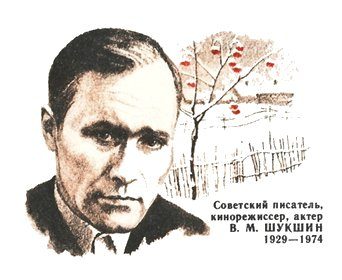
Shukshin's ancestors came to the Altai in search of a better life. The family settled in the village of Srostki, Biysk district, Altai region, after Vasily Makarovich's great-grandfather, Pavel Pavlovich Shukshin, moved there from Samara province in 1867.
Pavel Pavlovich 'brought from Russia' his elder sons: Semyon, Prokhor, Pavel and a second Semyon. Vasily Makarovich's grandfather and father were already born in the Altai and called themselves old-settlers. In the second half of the 19th century Siberians counted as old-settlers those who had lived there 25 years or more. The thinking was that in a quarter-century former resettlers lost their tie to home, 'grew into the old-settler way', and married into other old-settler families through their children.
The 1917 census: the family in full view
The household card of the 1917 All-Russian agricultural census gives a remarkably precise portrait of the Shukshins of that time. By its data, Pavel Pavlovich, his wife Marfa, his son Leonty with his wife Anna, Vasily Makarovich's grandfather and grandmother, and their children Makar and Pyotr all lived together. Nearby lived two of Pavel Pavlovich's daughters, Lukerya and Avdotya.
The family had a strong holding: 11 horses, 19 cows, 3 pigs. They sowed 32.2 desyatinas (35 hectares) with spring wheat and rye, oats, buckwheat and millet. There were small plots of flax, hemp and potatoes. By the standards of peasant Siberia, a prosperous family.
Who the 'chaldons' were, and what the Shukshins were
The true Siberian old-settlers were the chaldons, descendants of the first settlers of the new lands. They were Russian peasants from the north: people from Arkhangelsk, Vologda, Vyatka, Perm, the Zyryans, the Karelians. Almost all of Siberia's first settlers came from the northern regions of Russia.
The Shukshins were not chaldons; they resettled from Samara province much later. But their children and grandchildren already counted themselves old-settlers, Siberians. It is in this borderland between 'newcomers' and 'natives' that the particular identity Shukshin felt so finely, and described in his work, has its root.
Shukshin's own words on his ancestors
'I rarely envy anyone, but I envy my distant ancestors, their stubbornness, their immense strength. Today I would not know what to do with such force. I imagine the hardship of the road they made, from the North of Rus, from the Volga, from the Don to the Altai. I bow before their memory, and thank them with the dearest word I have managed to keep near my heart: they found, for themselves and for us, and for those after us, a beautiful homeland.'
How to find your own resettler ancestors in the Altai
The Shukshins' story is the typical story of thousands of Altai families. If your ancestors also resettled to Siberia, start with the Altai Genealogical Society database: 89,000 surnames for 1883–1908. If they came earlier, the 1917 household cards in the State Archive of the Altai Region (fond 233) will say whether the head was an old-settler or a resettler, and exactly where from.
For those whose ancestors were 'real' old-settlers, the Antroponimikon database helps: 2,396 old-settler peasant surnames of the Altai Mining District from 1,306 settlements in the mid-19th century.
Want to know your family's history in as much detail as Shukshin's? The genealogists at Family Relic will rebuild your line from the archive documents. Request a search at myrodoslovie.ru