What a household card contains
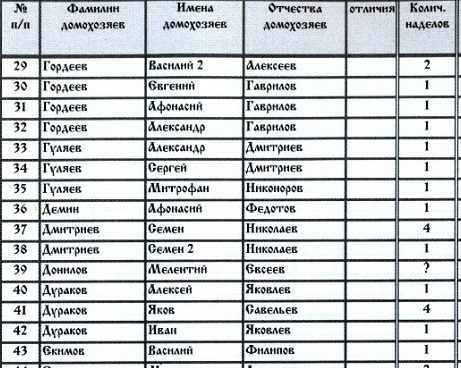
Taken over the summer and autumn of 1917, the census recorded, for each peasant household:
- the head of household's full name
- social estate and nationality
- occupation
- details of family members: their relationship to the head (brother, mother, wife, daughter, grandson), age, literacy and fitness for work
- notes on military mobilisation
- details of absent family members
- whether the head was an old-settler or a resettler, and if a resettler, from which province and in what year
That last point is gold for anyone whose ancestors moved. The census can fix the family's exact place of origin, which otherwise has to be chased through a chain of indirect sources.
Where the documents are kept
The 1917 household cards are spread across the archives of the regions where the count took place. The main holdings:
- Altai region — State Archive, fond 233
- Novosibirsk region — fond D-146
- Tomsk region — fond F-239
- Aktobe region (Kazakhstan) — GAAO, fond 69, inventory 2
For other regions, write to the regional state archive directly.
How the census pins down where a family came from
One of the most common requests we get is 'where did the family come from'. The 1917 census often answers it outright. A resettler's card gave the year of resettlement and the province of origin. Sometimes two provinces appear: a family might first move from Kursk province to Tobolsk, then settle for good in the Altai. One card hands you the whole story of the move.
When 1917 is the only way through
The genealogist Tatyana Bogdanova worked out a step-by-step method for when the main sources are lost. Step three is the 1917 census: if the parish registers are gone and no one in the family was born or died in that period, the census becomes the only document that can point to the head of household's place of birth or the family's place of origin.
Want to know where your family came from? The genealogists at Family Relic will find the answer in the 1917 census and other sources. Request a search at myrodoslovie.ru