The church as the only registrar
For many centuries, in most European cultures, the church was the sole official registrar of life events. Hence the system of saints' days and canonical names: a name was given by the church calendar, and the choice was tightly limited. That is why the parish registers of the 18th and 19th centuries repeat the same names so often: Ivan, Vasily, Mikhail, Maria, Anna, Tatyana. It is not a lack of imagination; it is the norm.
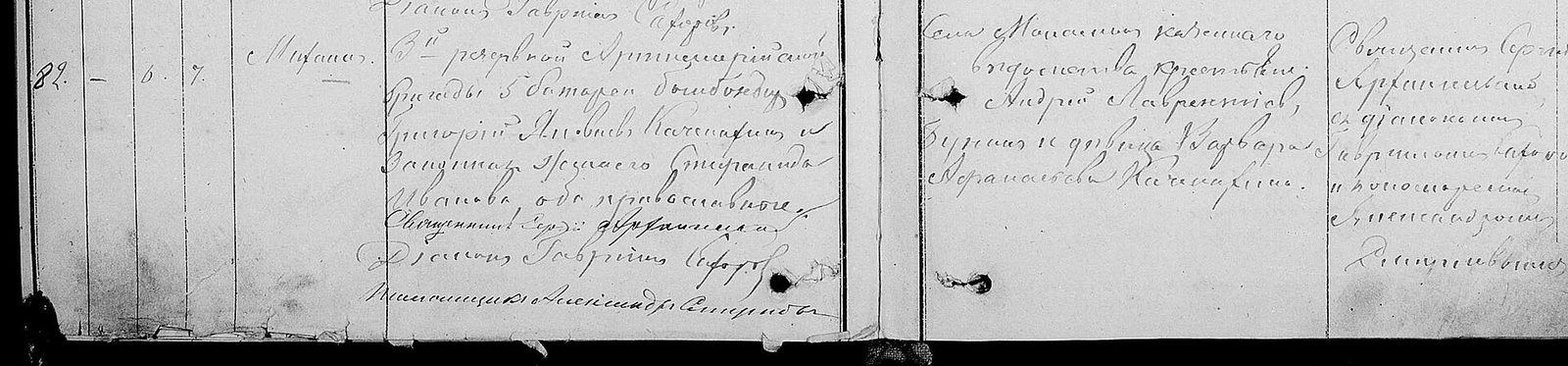
In Russia, from 1722, parish registers were kept in churches across the country by Peter the Great's decree. Orthodox parishes recorded births, marriages and deaths. Other faiths, synagogues, mosques, Catholic and Protestant churches, took on the same duty. The whole system rested on religious institutions.
Europe: how the state took registration from the church
The first major break came in Germany under Chancellor Otto von Bismarck. The Kulturkampf, literally the 'culture struggle', ran from 1870 to 1878. Its main aim was to limit the Catholic church's influence on state institutions in Prussia. One key result was the transfer of civil registration from church to state. From then on, birth, marriage and death were recorded not by a parish but by state services.
France went further: state registration became the only legitimate form, and church rites turned into a private matter for believers with no legal force. In the 20th century this logic spread to most of the world.
Russia: 1918 as the breaking point
In Russia the change was sharp and total. In December 1917 the Soviet government issued a decree on civil marriage, removing the legal force of a church wedding. In 1918 the ZAGS system was created and took over the registration of all civil acts.
For a genealogist, 1918 is the crucial line. Before it, look in church archives: parish registers are held in the regional state archives. After it, in the ZAGS offices and their archives. Many Soviet-era documents are still held directly in the ZAGS offices and are available to relatives on request.
Why a name became a civil attribute
The genealogist Tatyana Elfaizis, who studies the history of naming, notes that it was after ZAGS was created that a name stopped being religious and became a civil attribute of the person. The state began to regulate the form of a name, what unusual names were allowed, and how a name could be changed. The Soviet period brought a wave of revolutionary names, Vladlen, Industriya, Oktyabrina, unthinkable in the church system.
What this means for research
The practical takeaway is simple. If an ancestor was born, married or died before 1918, the trace is in the parish registers of the relevant church. After that, in ZAGS. For 1917 to the early 1920s, documents may be in both: some families still married in church after the revolution, some already registered civilly.
A special case is the Old Believers. Until the 1920s the Soviet state did not recognise their marriages as official, so children from such families were often recorded as illegitimate. That creates particular difficulties, but also opens specific fonds: records of conversion to Orthodoxy, registers of those who joined the faith from the schism.
Not sure where to look for an ancestor's documents, church archives or ZAGS? The genealogists at Family Relic will sort it out. Request a search at myrodoslovie.ru