The religious basis: baptism for the dead
The answer lies in a particular doctrine. By the church's teaching, living members can be baptised on behalf of a dead person who had no chance to do so in life. The idea is that this gives the dead a posthumous 'chance' to receive a rite the church holds essential for salvation. But to perform baptism for the dead you must establish the person's identity and confirm that they existed. Hence the need to gather records on as many people who ever lived as possible.
From a local society to global infrastructure
In 1894 the Genealogical Society of Utah was founded, the foundation of the church's modern genealogical infrastructure. Its main task: the systematic collection of historical records, church books of birth, marriage and death, censuses, migration lists.
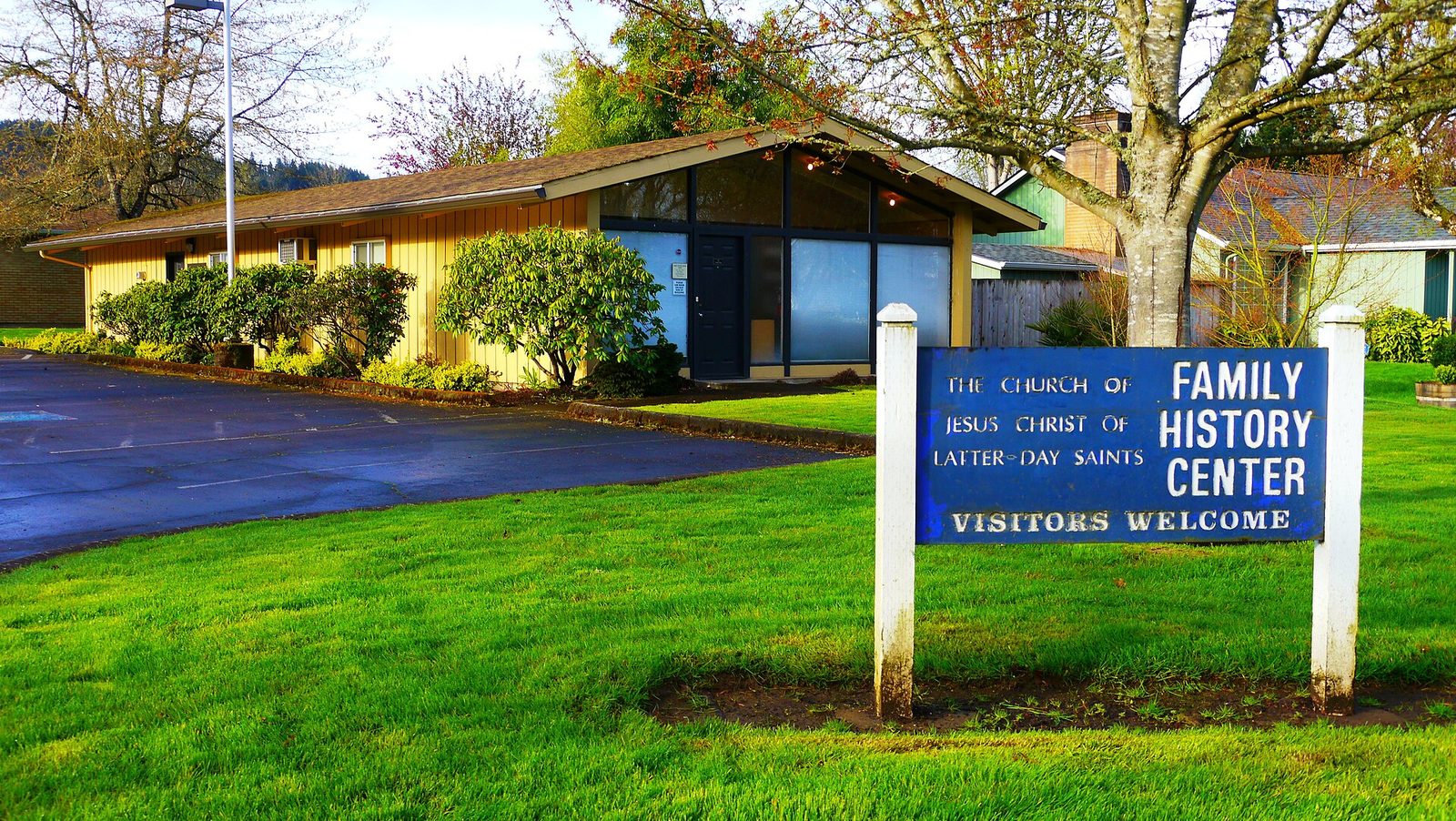
By the end of the 20th century the church had built one of the world's largest collections of genealogical data. Wired magazine noted that by the late 1990s the Mormon genealogy network had about 3,000 family-history centres worldwide. The main one is the Family History Library in Salt Lake City, the largest genealogical library on the planet. In 1999 the online project FamilySearch was launched.
What FamilySearch holds for Russian researchers
Although the resource is blocked in the Russian segment of the internet (reachable through a VPN), it remains an essential tool for genealogists. On FamilySearch you can find:
- partly digitised parish registers of Orthodox and Catholic parishes in Russia (mostly up to the 1870s)
- revision lists for a number of regions
- confession lists
- documents on resettlers and émigrés from Russia to the United States
- other users' family trees, potential relatives
An important limit: coverage is uneven. There is far more data for the central provinces than for the periphery. Many books are available only as unindexed scans that need going through by hand.
How to use FamilySearch in a search
The method: go to 'Search' → 'Catalog' → enter the settlement name → choose the document type (parish registers, revisions). If you know the church, pick the specific parish. Note that marriages were usually held in the bride's parish, not the groom's.
There is also the option to build your own family tree on the platform, which is automatically compared with other users' trees. It is one of the best ways to find distant relatives doing genealogy in other countries.
Why a genealogist should understand this
The Mormons' religious motivation produced a global genealogical infrastructure now used by people of every faith and none. It is a rare case in history: a private religious organisation has effectively done work that many governments still have not. For anyone searching for their ancestors, it is simply one of the best free tools available.
Not sure how to work with FamilySearch and other genealogy databases? The genealogists at Family Relic know every tool. Find out at myrodoslovie.ru