The main settlement types
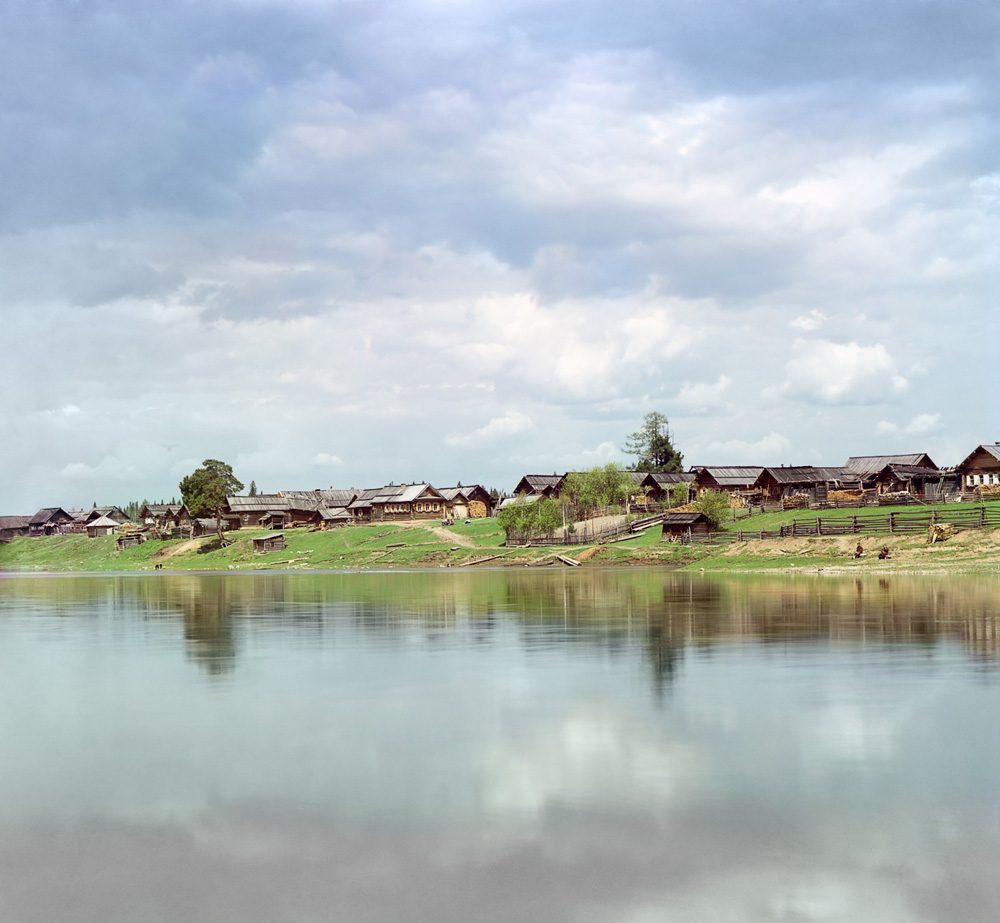
A derevnya (village) is a settlement without a church. The inhabitants are mainly peasants. Administratively it could belong to the parish of the nearest selo. Records on a derevnya's people are in the registers of the church whose parish it belonged to.
A selo is a settlement with an Orthodox church, often the spiritual centre of a parish and the administrative centre of a rural district. The parish registers were kept in the selo, and they covered the surrounding villages.
A seltso is a village with a landowner's estate, usually without a church. In the central provinces it is essentially an 'estate with peasant yards'. In the north-western provinces a seltso sometimes had a church.
A pochinok is a new settlement on cleared land. It often began with a single yard and grew over time into a village. It is typical of the forest zone of the North and the Volga region.
A vyselok is the official name for a group of yards that branched off from a main settlement. It could be counted in revisions and parish registers as a separate place while keeping a land tie to the original community.
Specific settlement types
A pogost is a church centre with a cemetery and the clergy's houses. Do not confuse it with a graveyard: a pogost is the administrative and church hub around which a parish formed. In a register, 'pogost so-and-so' means the documents are kept at that church.
A sloboda is a settlement with privileged status. Its inhabitants were temporarily freed from part of their taxes or duties. There were coachmen's, musketeers' and trading slobodas, each with its own administrative chain.
A pustosh is the abandoned site of a former settlement. An urochishche is the spot of a village or selo that has vanished. Meet these words in a document and you know that people once lived there, but the settlement no longer exists.
Settlements of Siberia and the south
A zaimka is a single-yard settlement on newly taken land. It is typical of Siberia and the Russian North, and often came before a khutor or a village.
A khutor is a separate farmstead or a small group of yards. It was common in the south of the Empire, during the Stolypin reform and in the Cossack regions. In Cossack areas a khutor belonged to a stanitsa.
A stanitsa is a Cossack rural settlement and administrative unit, usually with a church. It could include several khutors and zaimkas. Look for stanitsa records in the archives of the relevant Cossack host.
An ostrog is a fortified point ringed by a palisade. It served as a military and colonisation base during the conquest of Siberia in the 16th and 17th centuries, and often became the core of a future town.
Why this matters for research
The settlement type tells you which archive and which fonds hold the records. Village inhabitants were attached to the parish of the nearest selo, so that is where the registers are. Cossack stanitsa people might have separate documents through the host administration. Sloboda dwellers could appear in the specific fonds of privileged settlements.
In one of our cases a genealogist spent eighteen months looking for documents on a 'village' that pre-revolutionary sources listed as a 'pochinok', under a different name and in a different archive. Knowing the typology saves months of work.
Lost in the pre-revolutionary geography of your ancestors? The genealogists at Family Relic know where to look, whatever the settlement type. Request a search at myrodoslovie.ru