

On 25 January Vladimir Vysotsky, one of the icons of twentieth-century Russian culture, poet, actor and bard, would have turned 84. Ten facts about his life and work.
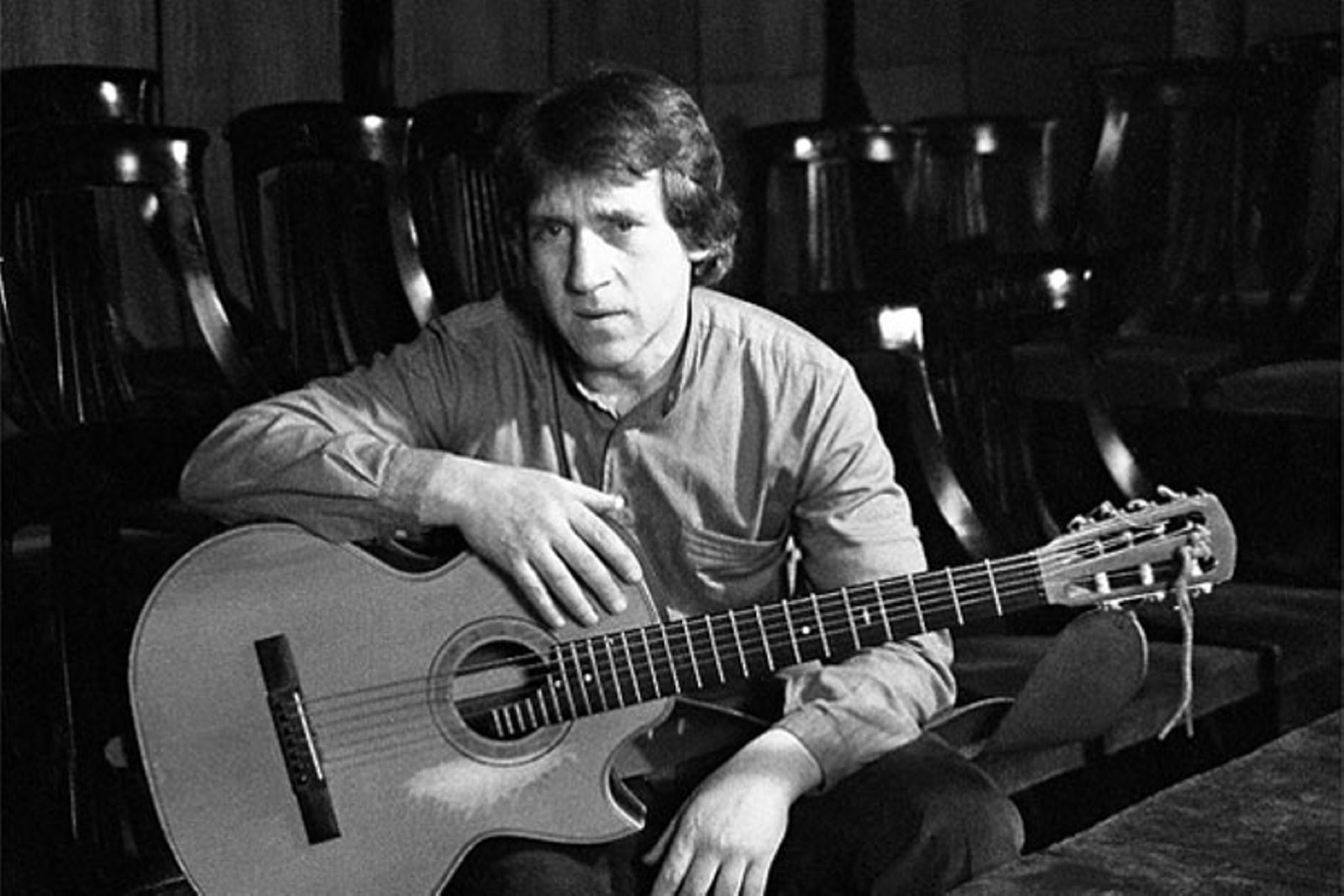
- 1.From the age of nine, little Volodya grew up without his mother. His parents divorced in 1946 and both had started new families. His father took him to Germany, where he was raised by his stepmother, Yevgenia Stepanovna Likhalatova, an Armenian by origin. Contrary to the fairy-tale tradition, she turned out to be a kind one. Volodya loved her dearly and called her "mama Zhenya". Later, to please her, Vysotsky was baptised in the Armenian Apostolic Church.
- 2.His first poem was dedicated to Stalin. In March 1953, when the "great helmsman" died, Volodya was fifteen. He wrote a poem called "My Oath", in which he mourned the loss and swore to keep faith with Stalin's legacy.
- 3.He decided to become an actor on New Year's Eve. He was a first-year student at the mechanical faculty of the Kuibyshev Moscow Civil Engineering Institute. He and his friend Igor Kokhanovsky were spending the holiday finishing technical drawings needed for exam admission. Suddenly Vysotsky poured coffee (some say ink) over his drawing and said: "That's it. I have six months. I'll try for the drama school. This is not for me."
- 1.He did not have the obvious physical attributes of an actor, but he willed himself into the role anyway. He was thin and narrow-shouldered; at school he had been nicknamed "the tall one", though he was only 170 centimetres. The type did not suit a leading heroic man. On top of that, he had a poor bite, awful diction and a hoarse voice with a narrow range. Only stubborn work on diction and on the body produced the Vysotsky we know.
- 2.He spent years looking for "his" theatre. After graduation he was assigned to the Pushkin Theatre, then the Theatre of Miniatures, then auditioned at Sovremennik. Only in 1964 did he join the Taganka Theatre of Drama and Comedy, where he stayed until his death. That is where he played his most famous role — Hamlet, in Yuri Lyubimov's production.
- 3.On film sets he was "impossible". He loved to improvise, often abandoned the script, argued with directors and co-stars. He hated retakes and demanded that scenes be shot in one. He explained it like this: a scene can be acted many times over, but it can only be lived once.
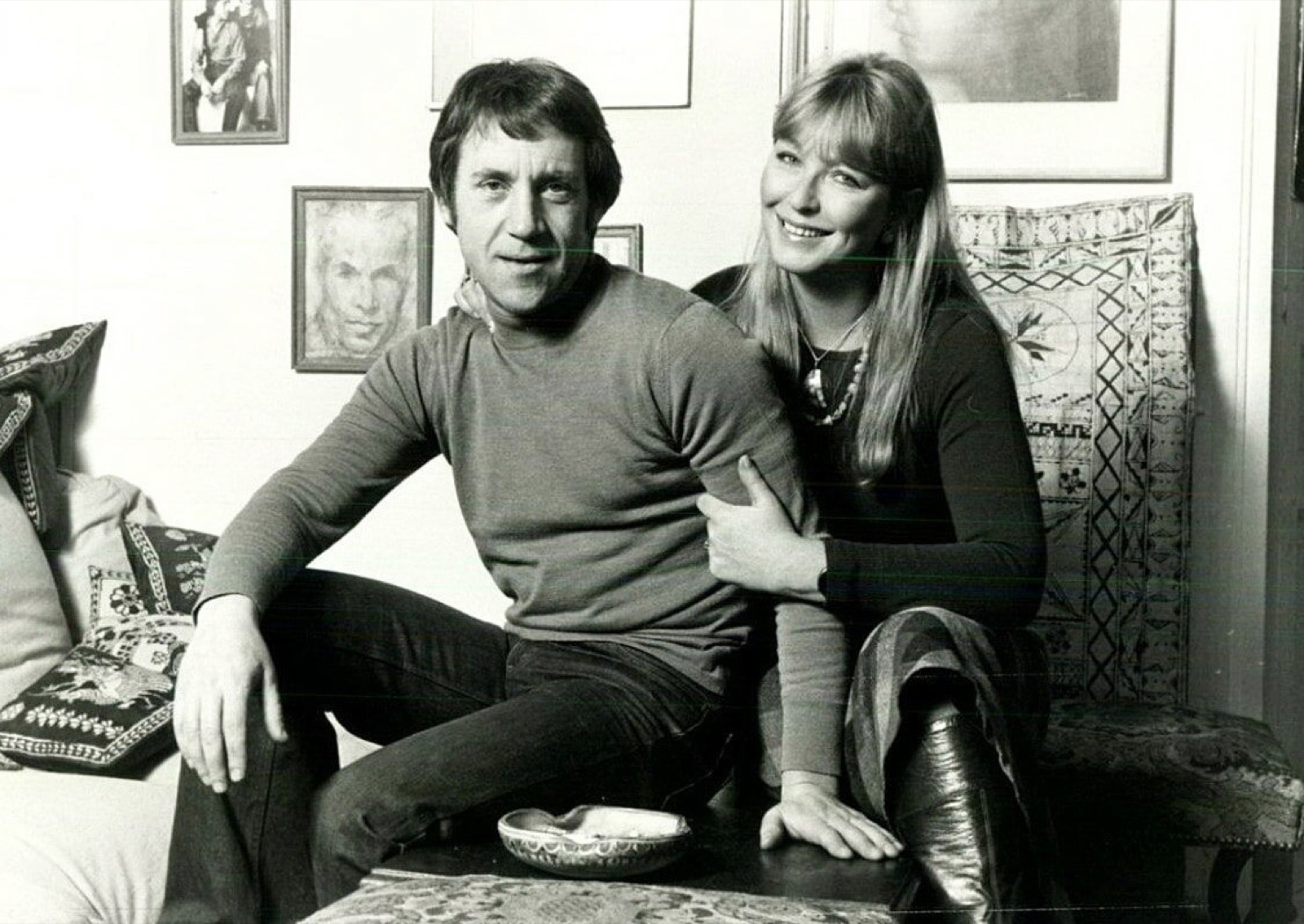
Vladimir Vysotsky with his wife, Marina Vlady.
- 1.Official recognition came only two years before his death. In 1978 he was awarded the highest category of stage vocalist-soloist. Until then the authorities tried to ignore the rebel poet. He was kept out of film roles. Not a single concert or interview of his was shown on television in his lifetime. He was not even allowed to voice the famous Wolf in the cartoon Nu, Pogodi! — Anatoly Papanov was given the part instead.
- 2.He was married three times. His first wife was his classmate Iza Zhukova. The marriage was short — the two actors ended up in different cities. The second marriage to actress Lyudmila Abramova gave him two sons, but also did not last. The third, to the French actress Marina Vlady, was the longest and the happiest. She stayed by him until his death and became both his muse and his anchor.
- 3.Vysotsky died at the height of the 1980 Moscow Olympics, and the authorities did not want a public funeral. Only two newspapers reported his death — Sovetskaya Kultura and Vechernyaya Moskva — and a short notice appeared at the Taganka ticket office: "Vladimir Vysotsky has died." The news travelled across Moscow within hours. More than 100,000 people came to say goodbye. The queue to the coffin stretched for nine kilometres.
- 4.Over his lifetime Vysotsky wrote between 600 and 800 songs, by various counts, and around 1,000 poetic works in total. Many of his songs appeared in Soviet films. Several generations still know them by heart.

