
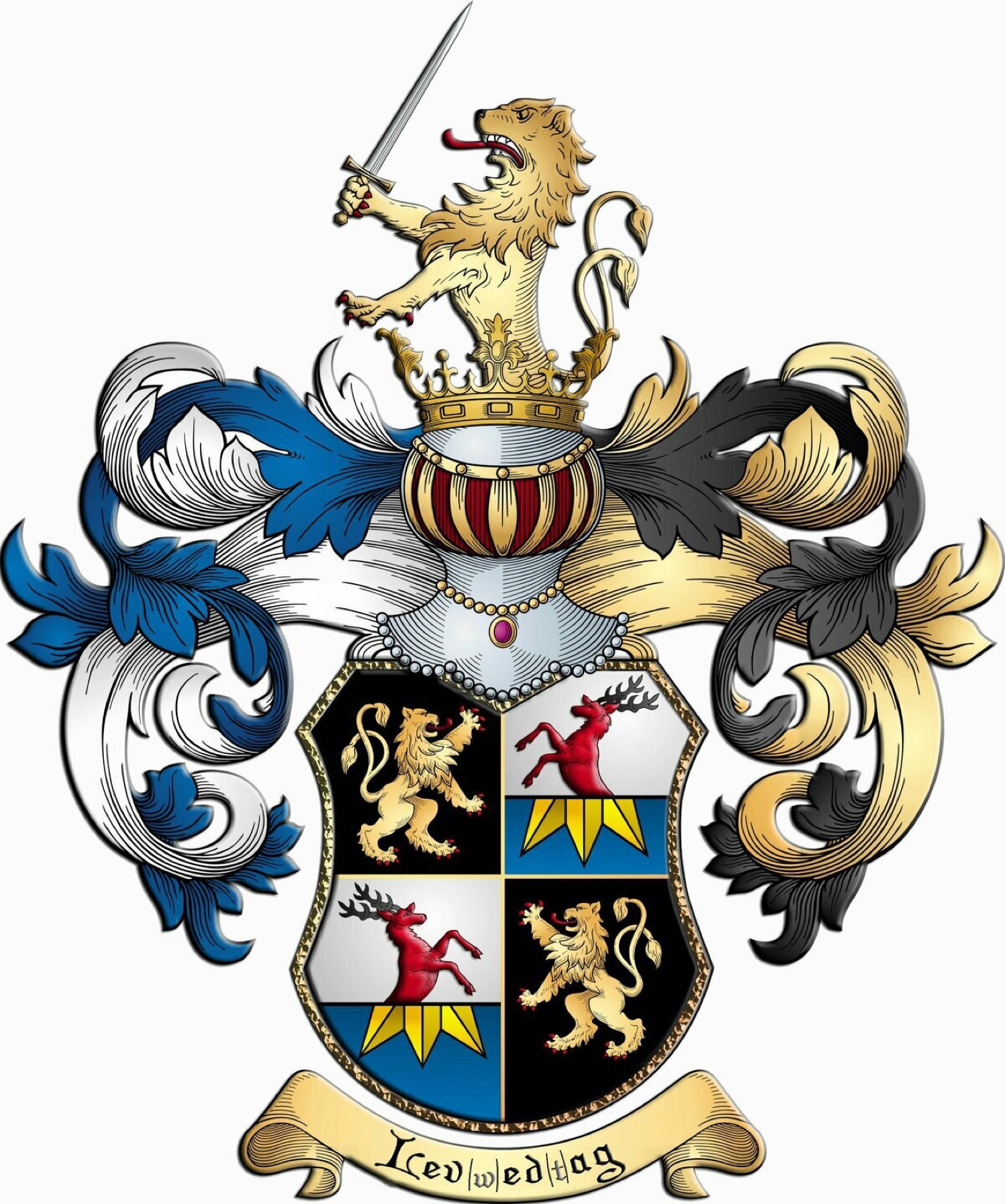
What a blazon is
A blazon is the verbal description of arms according to the strict rules of heraldry. Every real coat of arms starts as a blazon and only then becomes a graphic. The blazon describes the field of the shield, the figures on it, the tinctures, the helm, the crest, and the motto.
A blazon might read: "Azure, a lion or holding in its dexter forepaw a sword argent." From that one sentence any heraldist will draw the same coat of arms. That is the universal language of the discipline.
Tinctures — the colours of heraldry
Heraldry uses a strictly limited palette. The metals are or (gold, drawn as yellow) and argent (silver, drawn as white). The colours are gules (red), azure (blue), vert (green), purpure (purple), and sable (black).
The main rule: metal does not go on metal, colour does not go on colour. A gold lion on a silver field is wrong. A gold lion on an azure field is correct. The rule exists for contrast — heraldry was designed to be readable from across a battlefield.
Charges and what they mean
Every figure in heraldry carries meaning. A lion stands for courage. An eagle for nobility and vigilance. A lily for purity. An oak for strength. A sword for justice or service. But the point is restraint — a coat of arms is a composition, not a collage. One or two central elements, and the rest is field and frame.
Who designs arms
A professional heraldist is a historian. They know the rules of heraldic composition, the origins of the charges and tinctures, and both the Russian and the European traditions. This is not a graphic-design discipline. A designer will draw something beautiful, and the result will be a logo, not arms.
We work with members of the Russian Genealogical Society. Design time is two to four months. The deliverable is the blazon, a colour rendering, a black-and-white version for stamps and seals, a certificate with the description, and gold tooling on the family book if a book is part of the project.
Registration
In Russia, private arms are not officially registered by the state. The Heraldic Council of the President of Russia handles only municipal and state symbols. Private registers exist — the Russian Genealogical Society keeps one, individual heraldists keep their own. Being entered in such a register is not a legal act, but it does fix authorship and date.
For a family, this is a cultural matter rather than a legal one. The arms are a symbol of belonging to a line, an element of the family book, an inheritance that gets handed to the children.


