
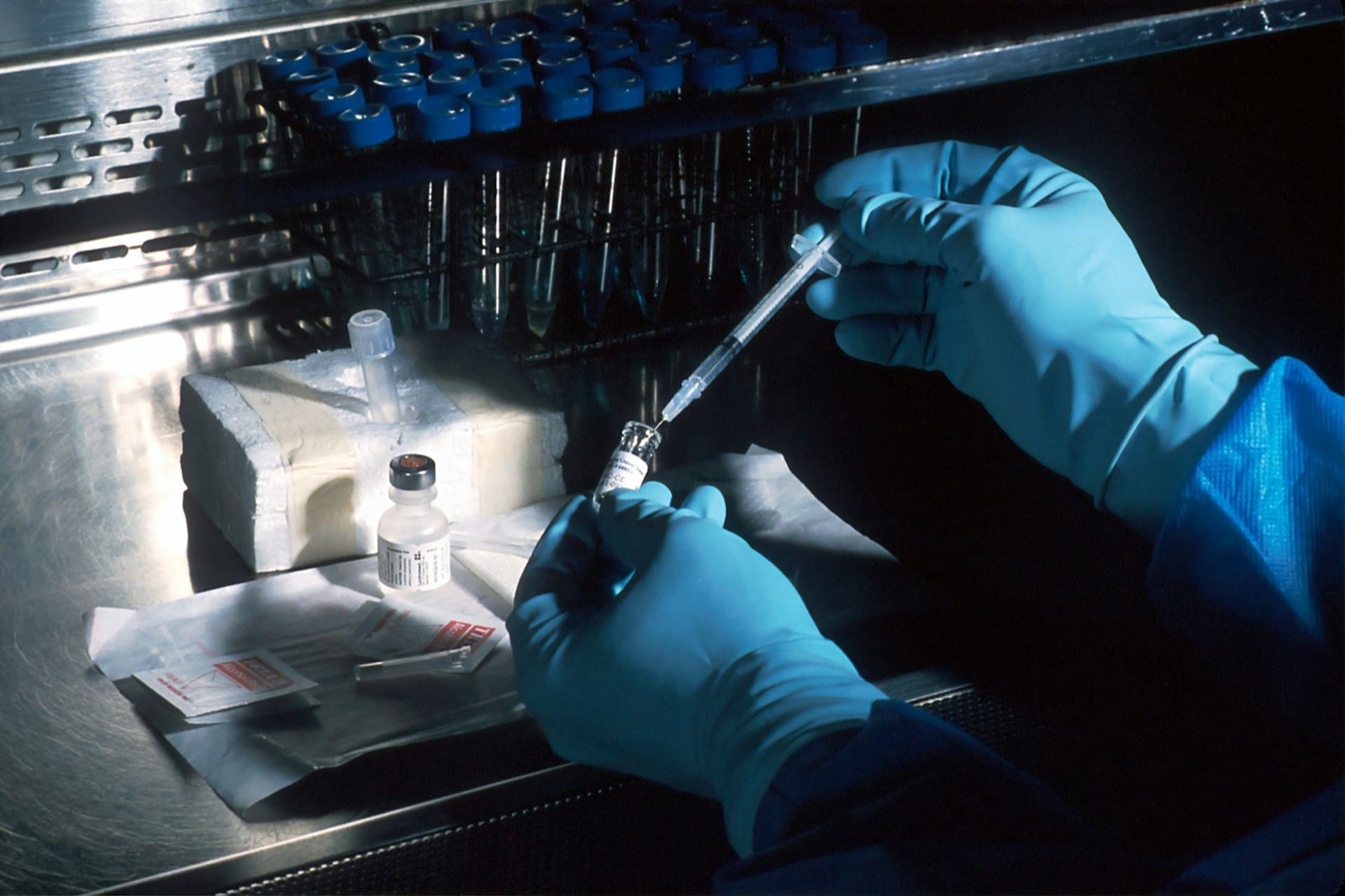
Three different tests, three different answers
Genealogical DNA analysis uses three distinct test types, and they reveal completely different things. Before you order anything, work out which type you actually need.
- Y-DNA — analyses the Y chromosome, passed only from father to son. Tracks the direct paternal line.
- mtDNA — mitochondrial DNA, passed from mother to all children. Tracks the direct maternal line.
- Autosomal DNA — analyses everything else. Finds relatives up to roughly five generations on any branch.
What you can actually learn
Ethnic estimate is the most common request. An autosomal test gives you a regional breakdown: 45% Eastern European, 30% Balkan, 15% Finno-Ugric, 10% Caucasian. That part of the technology works.
Haplogroup is your genetic "surname" on either the paternal or maternal line. Y-DNA haplogroup R1a points to Slavic and broader Indo-European roots. J1 points to Jewish, Caucasian, or Middle Eastern origins. A haplogroup tells you where your ancestors came from one thousand to five thousand years ago.
Matches with other testers in the database are the most genealogically useful output. If your third cousin once removed has also tested, you will appear in each other's match lists. Those matches are how you find relatives you had no idea existed.
What DNA cannot tell you on its own
DNA will not give you names and dates. It will not say "your great-grandfather was Ivan Petrovich, born 1875 in Kaluga Governorate". That information lives in archives.
DNA will not pinpoint the specific village your ancestors lived in two hundred years ago. It will give you a region, sometimes with an error of hundreds of kilometres. And ethnic distributions get recalculated by labs over time. What is shown today as "Eastern European 50%" can become "Eastern European 35% + Baltic 15%" next year.
DNA will not let you claim descent from a specific noble line. J2 haplogroup occurs in roughly 20% of Mediterranean men. It does not make you a descendant of Caesar.
Why DNA and archives belong together
The strongest use of DNA is verifying archive findings. Suppose archive work suggests a common ancestor between two families. A DNA test of one representative from each family will either confirm the hypothesis or refute it. Without an archive, DNA on its own is just a map of genetic matches without names.
It works in reverse too. A DNA match with someone who already has a documented tree back to the eighteenth century unlocks that tree for you. This is how lost branches of emigrant families and descendants of unrecorded children get found.
Which labs make sense
In Russia, genealogy DNA testing is done by Genotek, Atlas, and MyHeritage through partners. Internationally — FamilyTreeDNA, AncestryDNA, 23andMe. Prices range from 9,900 ₽ for a basic autosomal test up to about 40,000 ₽ for extended Y-DNA with deep haplogroup analysis.
We do not run DNA tests ourselves — that is a medical service that needs a licence. But we work with results from any of those labs: interpret haplogroups, search for matches, test hypotheses against archive findings.
«DNA in genealogy is a compass, not a map. It points you in the right direction. The actual map — who, where, when — is still drawn by the archives.»


